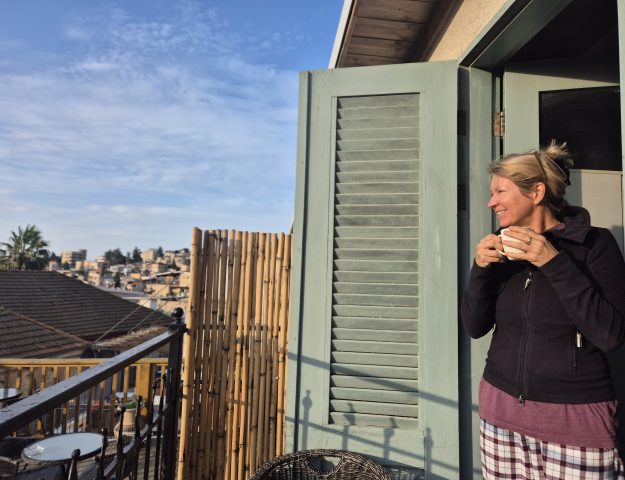
Another beautiful day was waiting for us, but first things first: breakfast. Our hotel had given us a voucher to use at one of the cafés across the street, and we chose Shtroudl—purely because of the name. Known mainly for its European-style desserts, it turned out to be the best breakfast spot we found in Israel. No trace of Austria or strudel though on the breakfast menu—instead, a spread of Arabic and Israeli dips and savory egg dishes. Simple but delicious, it suited us perfectly, especially since we had already reduced our days to just two meals—the food here is wonderfully rich.
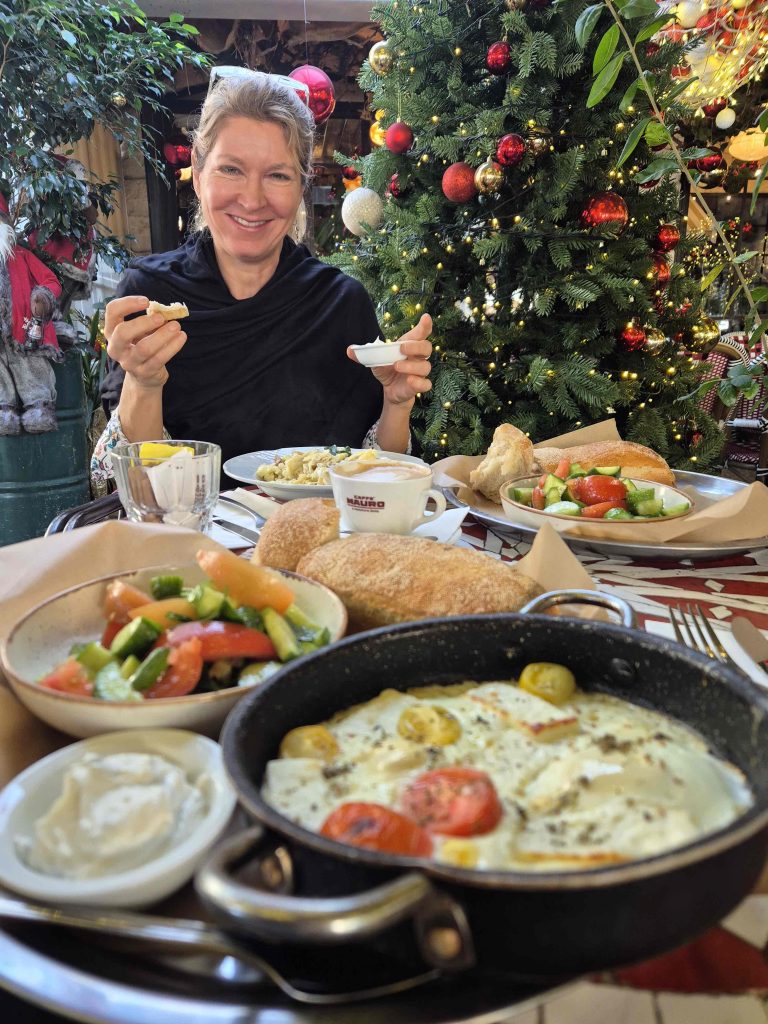
Omlettes with potatoes and spinach or eggs sunny side up with roasted cheese, always with a fresh tomato and cucumber salad as well as fresh bread and usually hummus and/or labneh on the menu. Sweet breakfast is not customary here. Labneh is a kind of Tsatziki without the cucumbers, and the roasted cheese is a bit chewy and salty version of Feta. It all tasted delicious though.
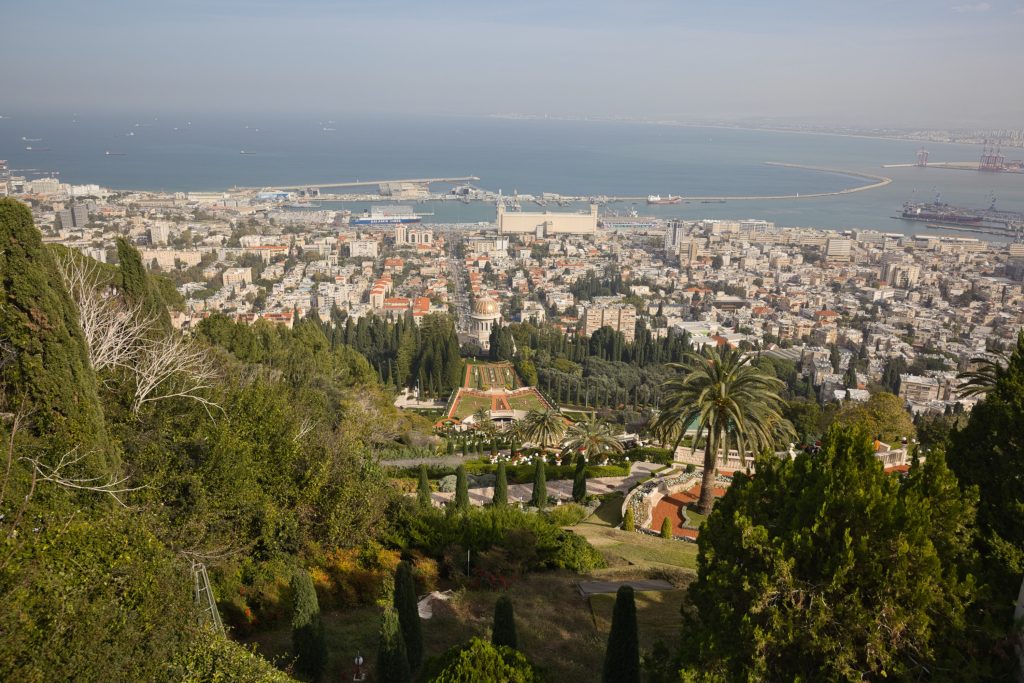
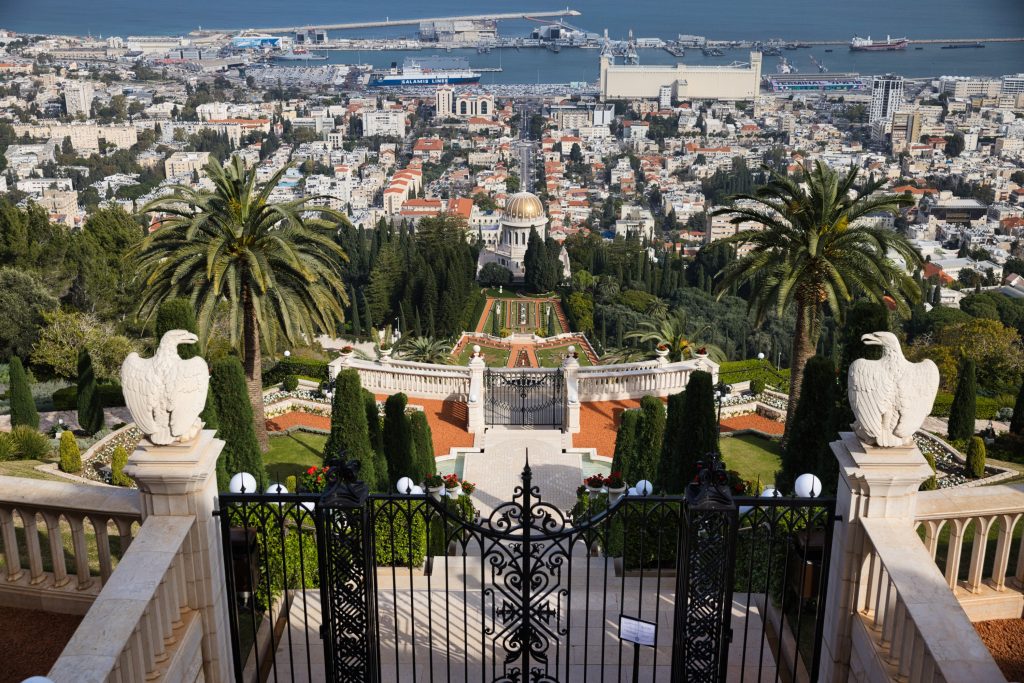
After filling our bellies, we decided to tackle the uppermost part of the Baháʼí Gardens. This time, instead of walking up, we drove along the winding roads to the top of the Carmel Ridge—a car ride of barely seven minutes. The gardens from up top were just as stunning as the ones below the shrine.
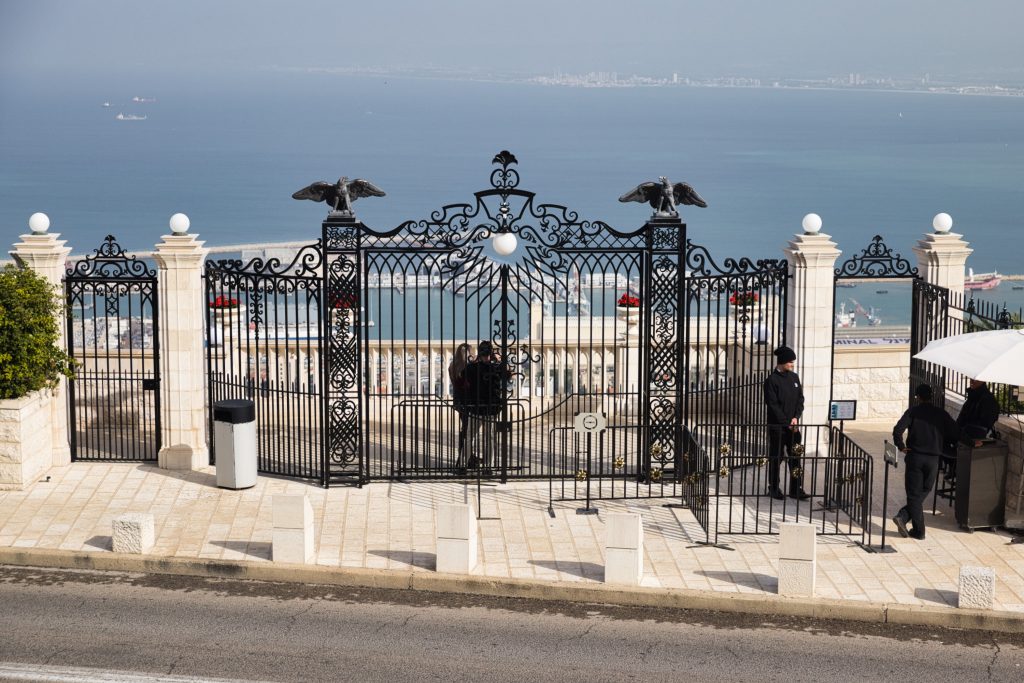
Beautifully crafted gardens, grass kept very short, beautiful blue skies and a stunning view over the haifa bay, even though Haifa is not a pretty city. It‘s industrial character can be seen everywhere. Nearly the entire coast line of Haifa is commercial harbour. Large unloading cranes lift their heads into the sky andfreight vessels are everywhere. Parallel to the coast line the train lines run, wires and electricity posts everywhere. Then put a city autobahn next to it and what‘s left has a hard time being picturesque. It is more of a functional city than a beautiful one.
For beauty and interest you have to drive outside haifa either North to Akko or south to Caesarea.
Caesarea is an ancient sea port and had it‘s importance mostly during the Roman period. Under Emperor Augustus (formerly Octavian), his client king Herod the Great built an extraordinary engineering masterpiece in his honor.
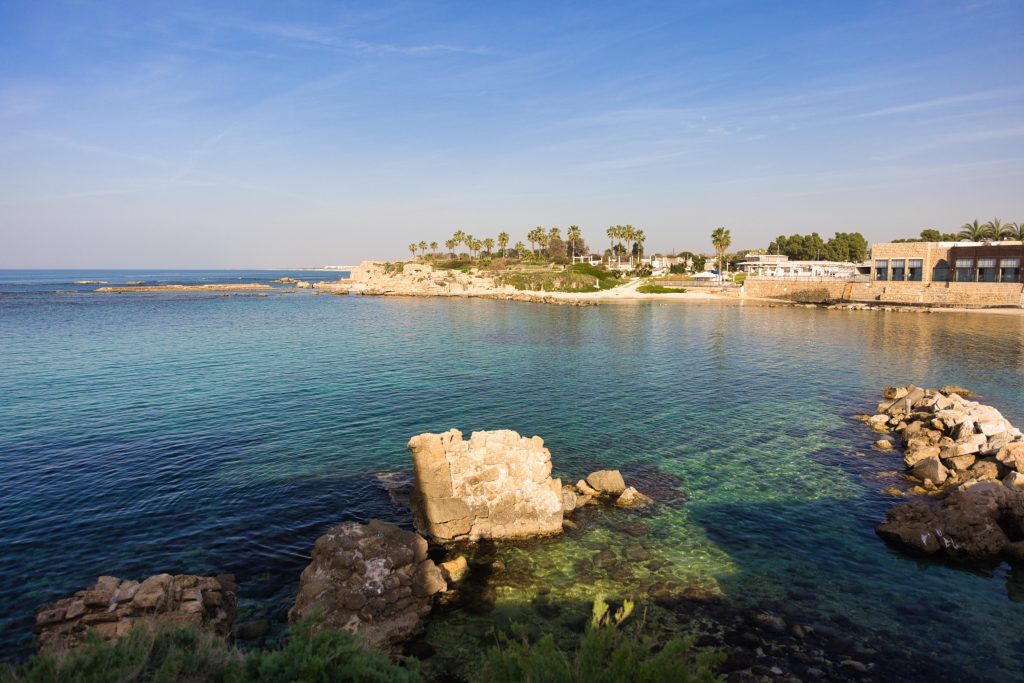
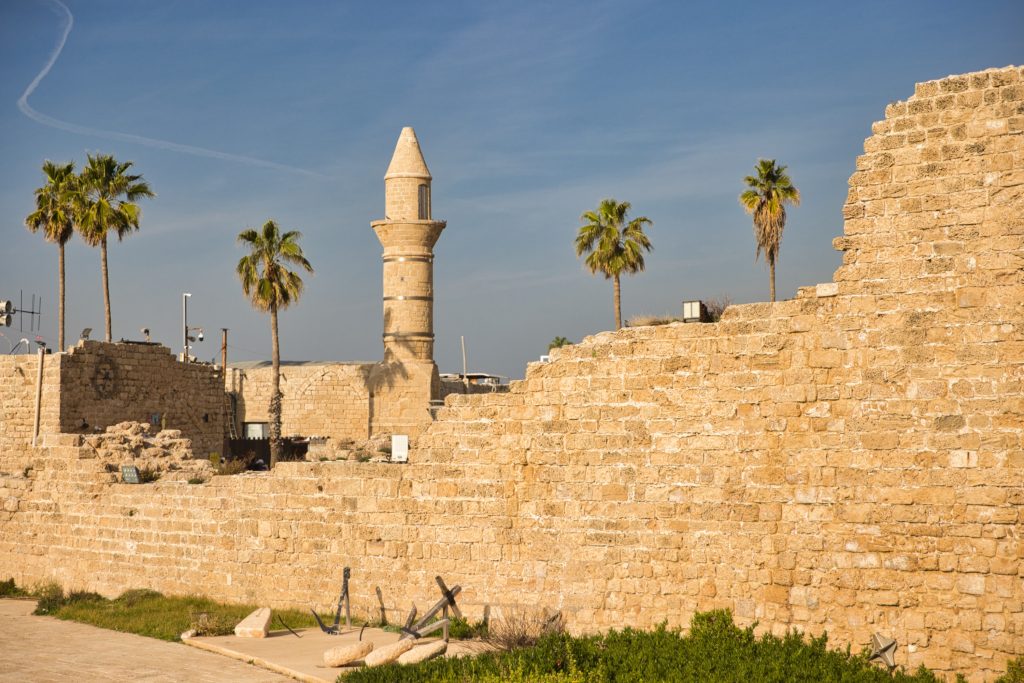
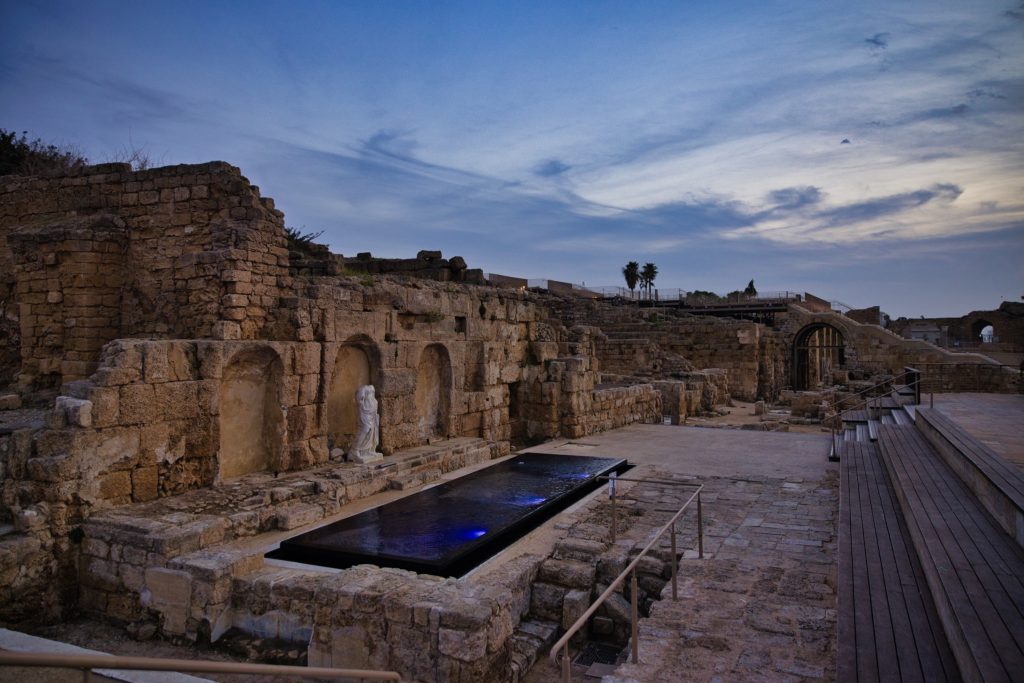
Not only did he build the deep sea harbour that allows even large ships to safely land, he also built a fortified city for 10.000 people, complete with several palaces, temples, bath houses, circus (Hippodrome) and Amphitheater.
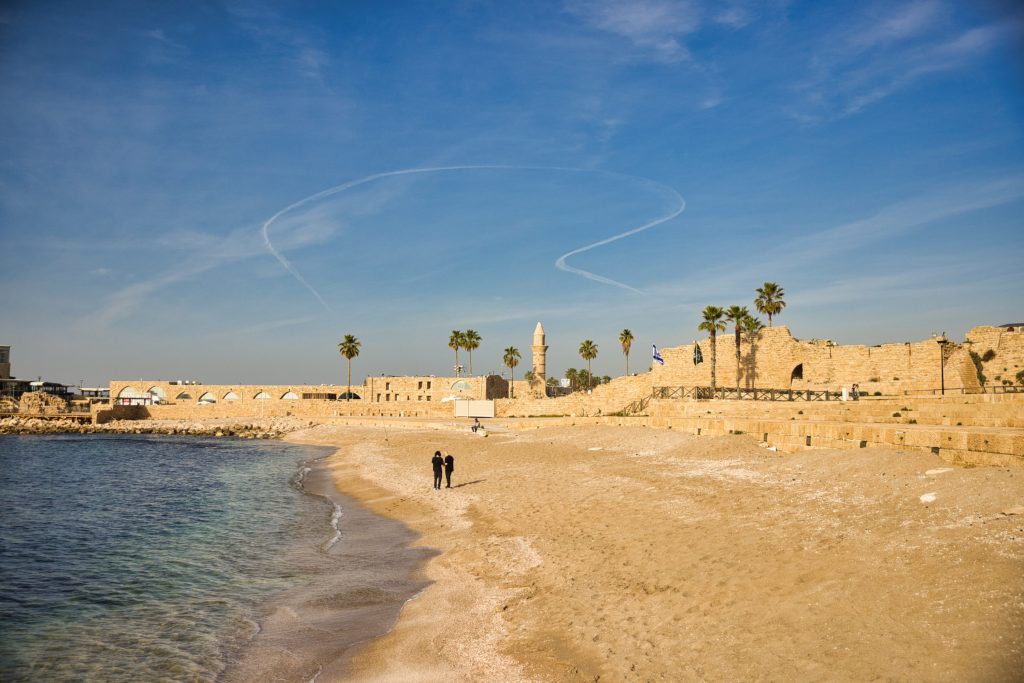
The harbor itself was an engineering breakthrough. Herod used a new kind of Roman hydraulic concrete, poured into wooden frames underwater and mixed with volcanic ash, which hardened even below sea level. This allowed massive breakwaters to be constructed, forming protective walls on both sides of the harbor entrance and making Caesarea one of the first true artificial deep-water ports in the ancient world.
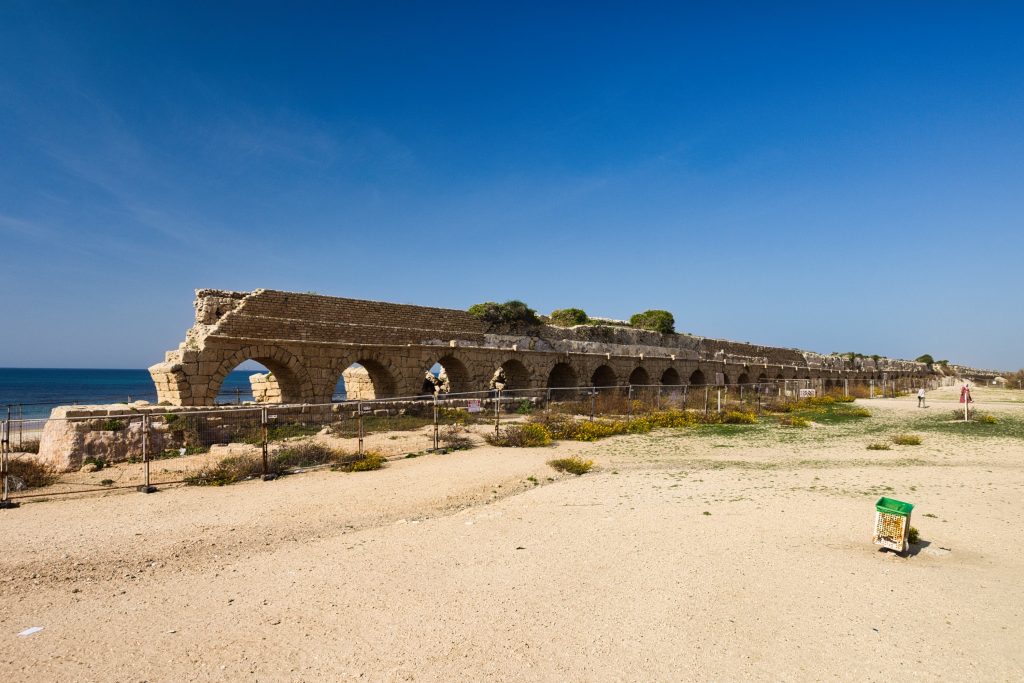
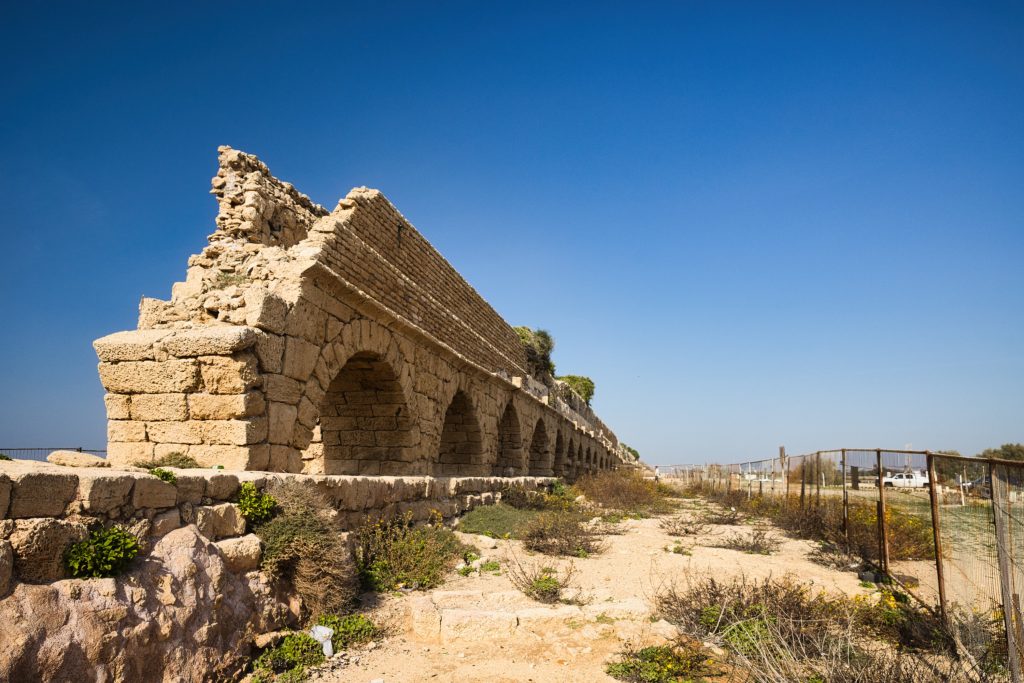
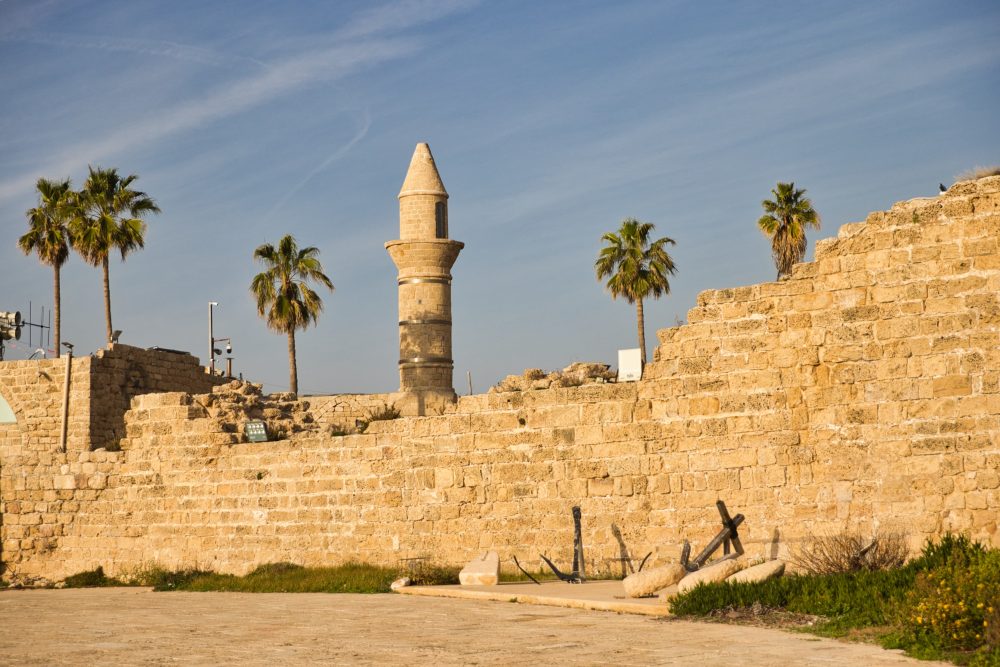
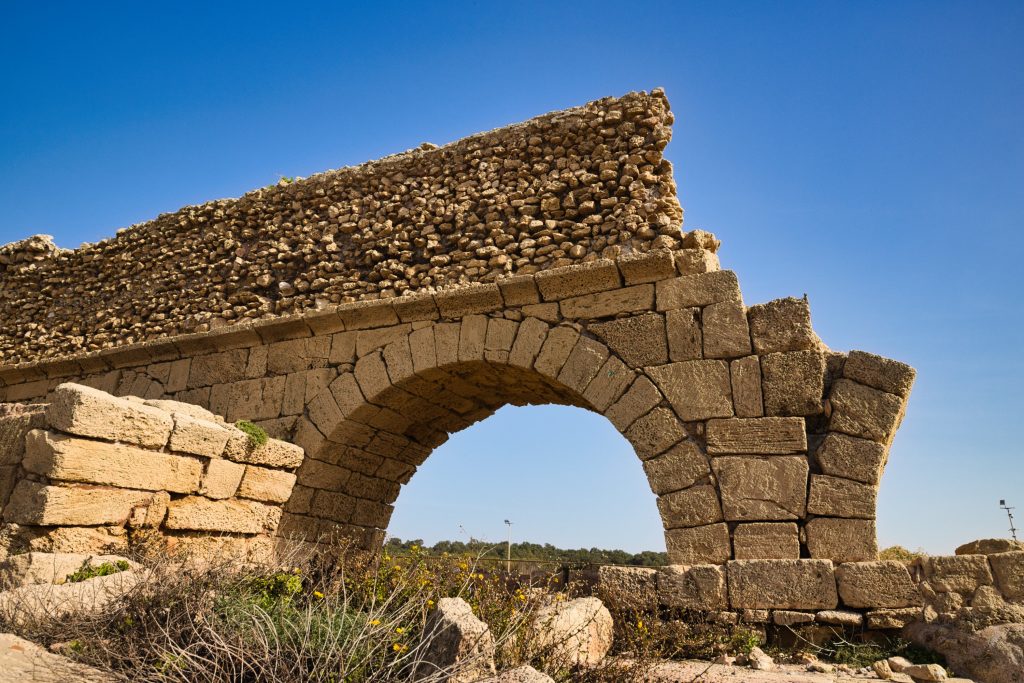
On top of all that he also built an aqueduct leading from the springs in the Carmel Mountains to Caesarea to make sure the city always had fresh water available. The ruins today don‘t do it always justice how much of a feat that must have been. But then again: But the fact that so much of it still stands after two thousand years is proof enough of its ingenuity.
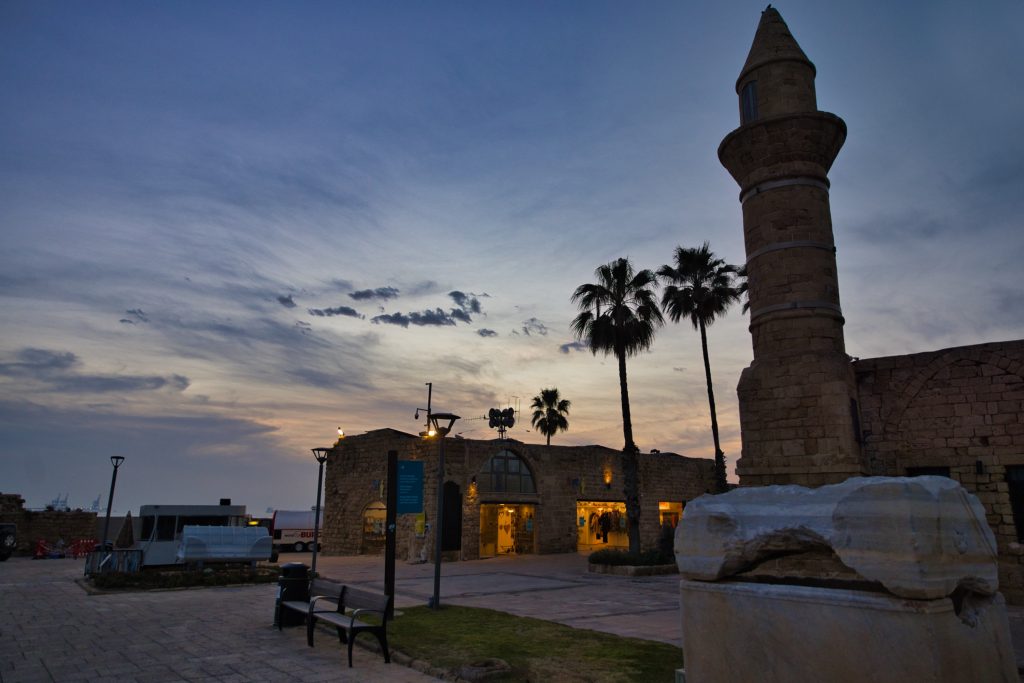
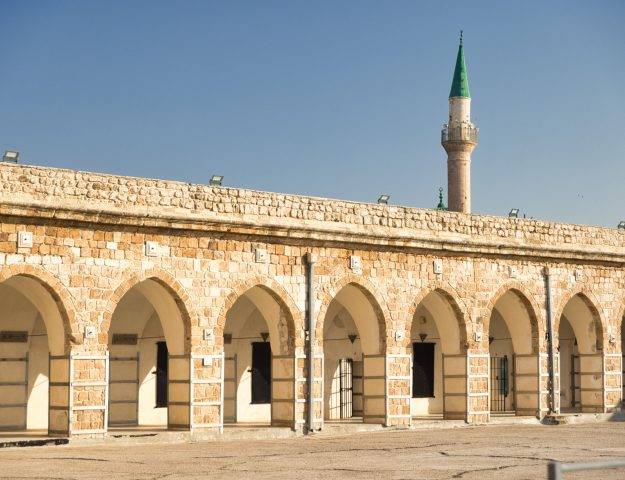
In later times, the cruisaders took over Caesarea and fortified just the main areas around the harbour and the city, but built over the hippodrome and the Amphitheater. During the cruisader times, just like Akko, Caesarea was an important entry gate into the holy land. But over time, however, the harbor began to silt up. The coastline in this area is highly dynamic, with strong currents and shifting sand dunes gradually clogging the ancient breakwaters. Without constant maintenance, the harbor lost its function, and large parts of the city were slowly buried under sand. For centuries, much of Caesarea lay hidden until systematic archaeological excavations began in the late nineteenth and early twentieth centuries, revealing the scale of what had once been one of the Mediterranean’s great ports.
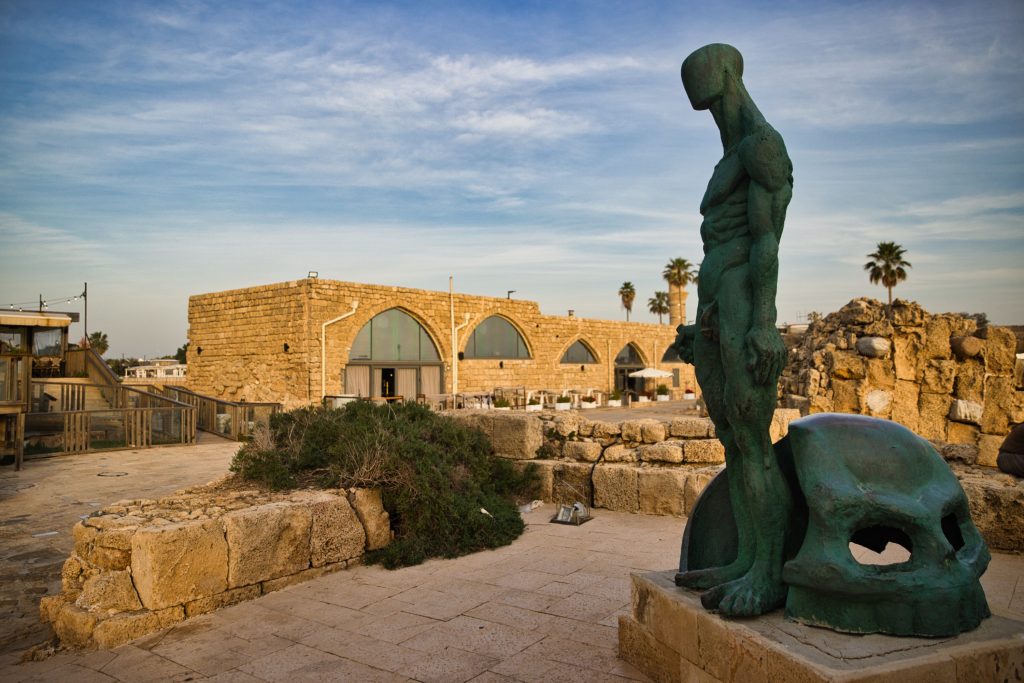
We spent a good four hrs walking the grounds, and getting the feel for how it must have been when 10.000 people came to the games at the Circus to watch the chariot races and battles of slaves or prisoners against wild animals.
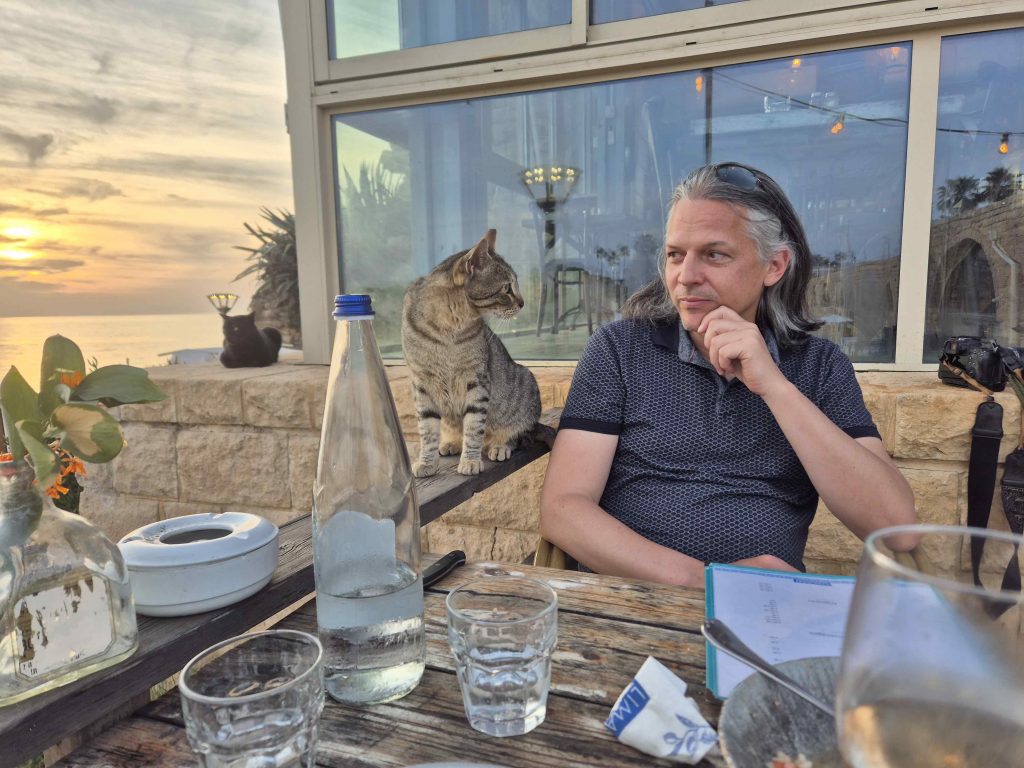
We decided to enjoy our last late afternoon and a nice sunset with 25 degrees and a balmy breeze sitting in a restaurant in the sun enjoying a glass of wine and a fresh grilled sea bream. In cat company of course…