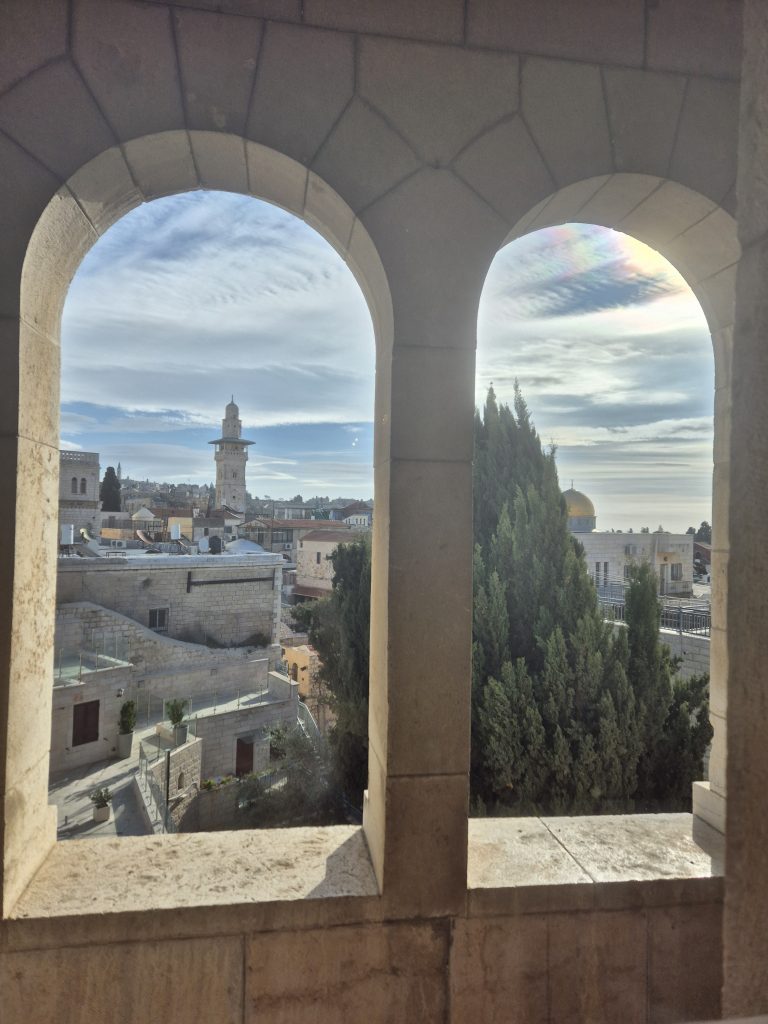
We took a slow start to the day with a long breakfast at our Austrian Hospice, then decided not to rush anything.
We felt we had already seen most of the main attractions, so we went looking for places that are easier to miss. Today, a large open plaza stretches out in front of the Western Wall. That wasn’t always the case. Before the Six-Day War, buildings stood right up against the wall, leaving a passage barely three to four meters wide. After the war, the Israelis demolished the buildings directly opposite the wall to create space—and security—for worshippers.
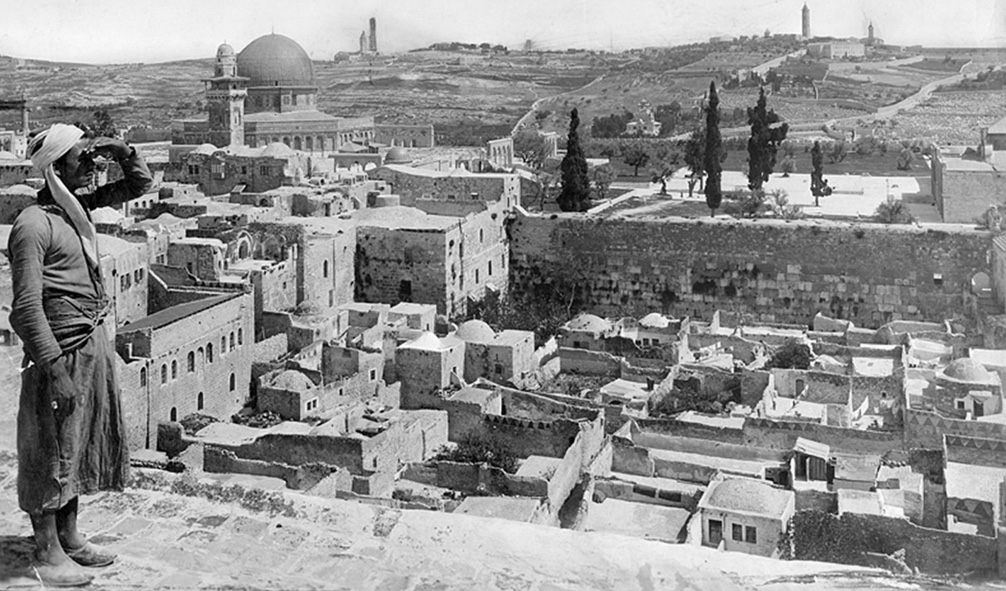
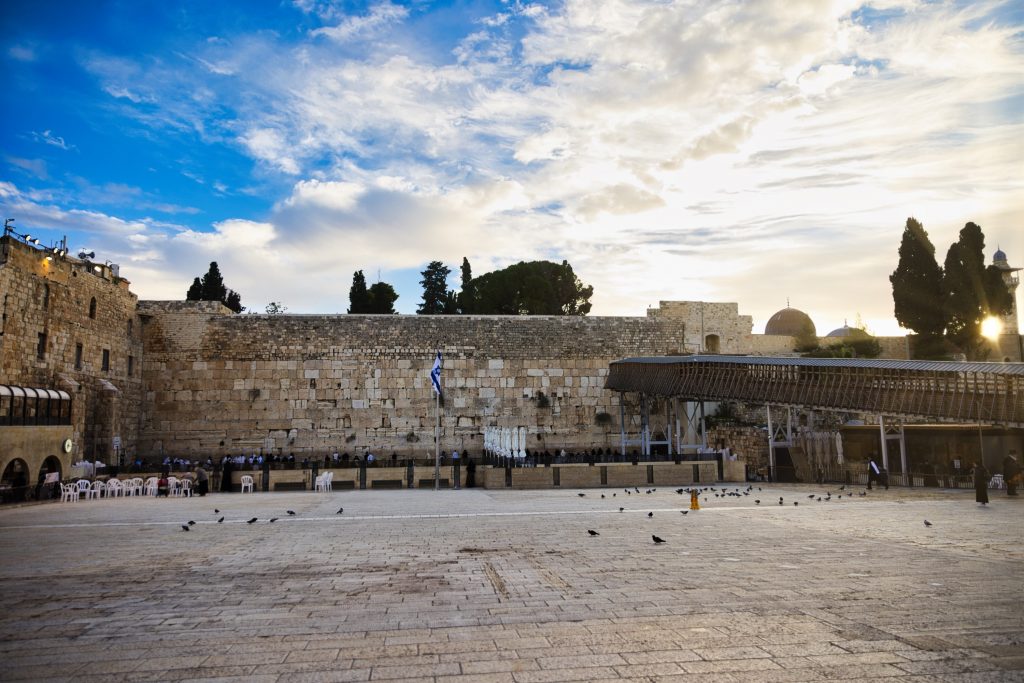
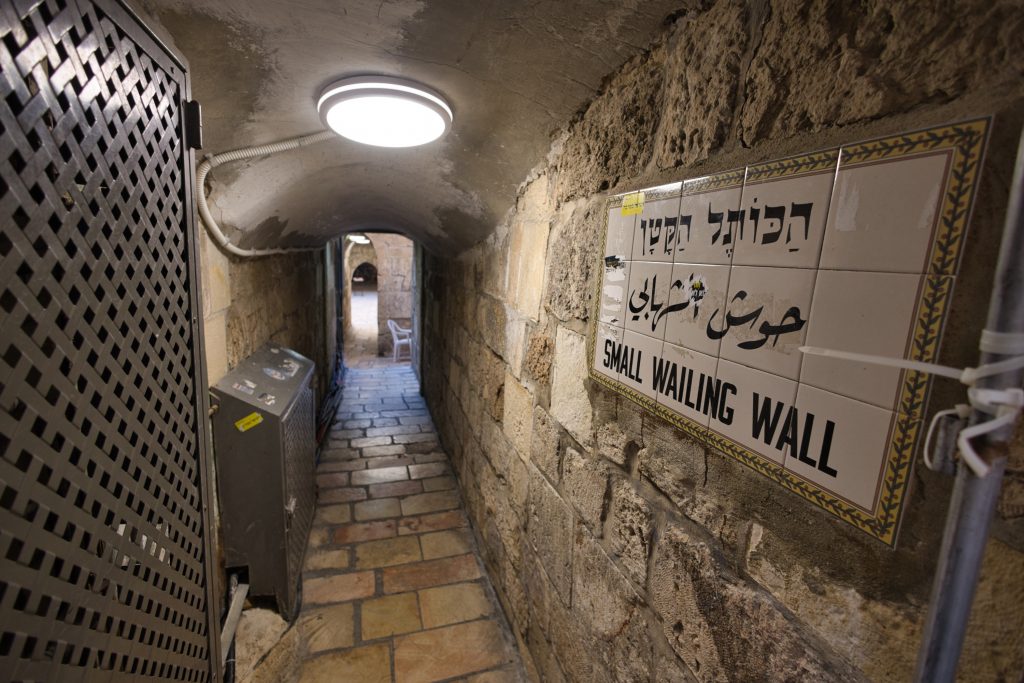
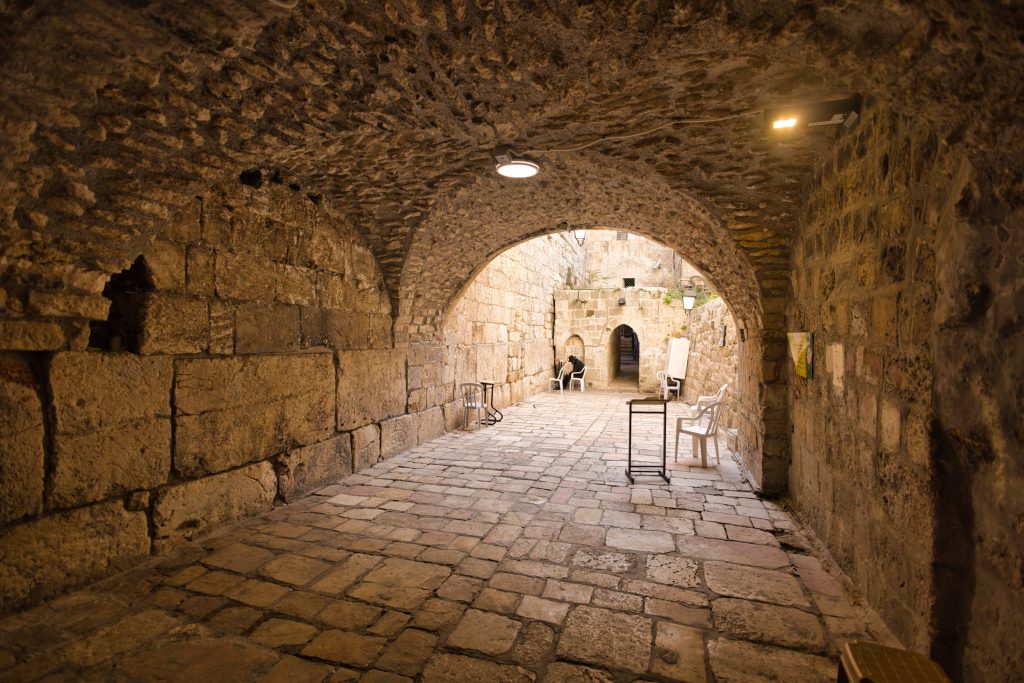
What many visitors don’t know is that a small section of this original setting still exists: the Little Western Wall. Reached through narrow alleyways near the Cotton Merchants’ Gate, a small street leads into a quiet cul-de-sac. On one side stands a portion of the Western Wall itself, with tiny folded prayers tucked between the stones. On the other, buildings rise just a few meters away. This gives one an authentic feeling of what it must have looked like before. Men and women pray together here, not gender separated. A peaceful part of town, tucked away yet so central.
We made our way once more to the holy church of St. Sepulchre to see it again in a different light. Many more tourists were milling about and the Armenian Church section was open today displaying some colorful paintings on the church walls and plenty of gold plating everywhere.
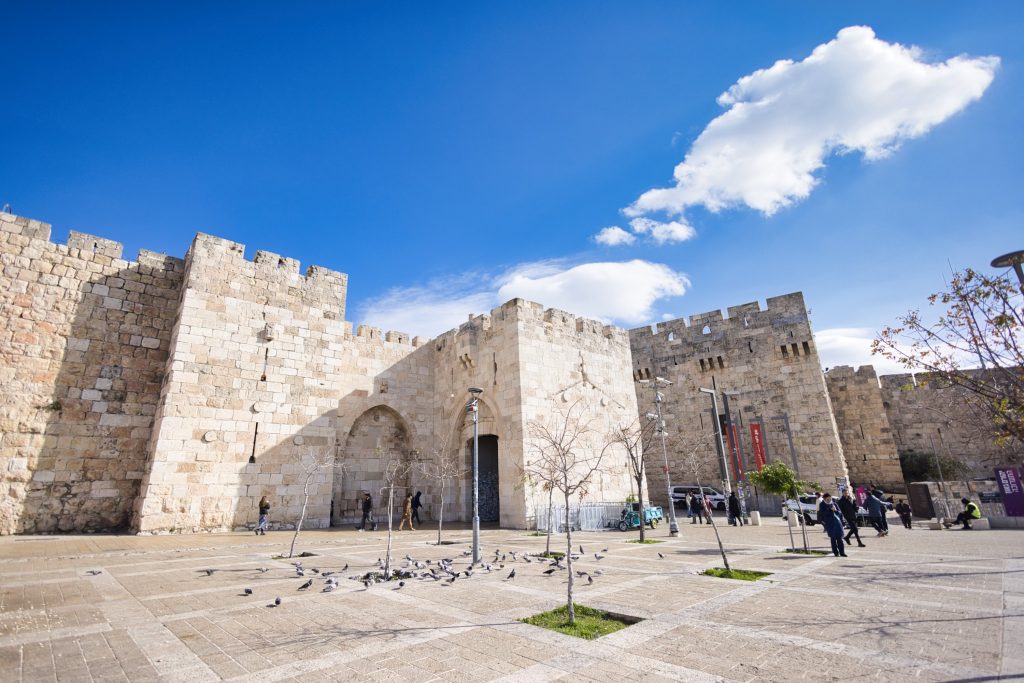
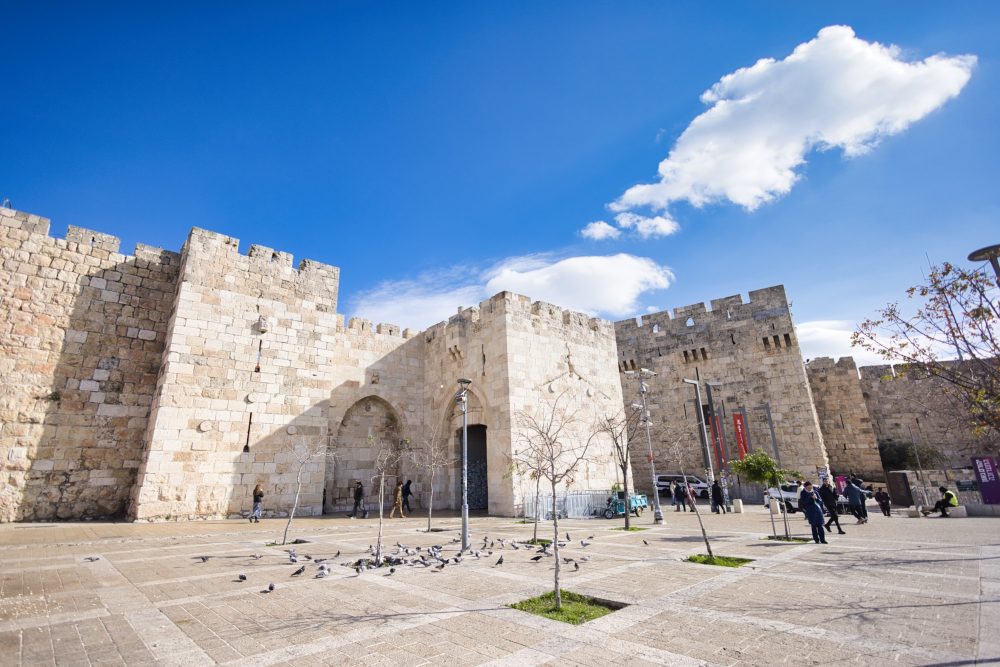
Making our way to Jaffa gate, Esther tried to hunt for a little donkey or horse to add to our collection we try to bring back from every vacation. Thinking that a wooden donkey can“t be difficult to find with so many wooden crib scenes on display. Each had at least one donkey as part of the picture, but no one was wiling to sell the donkey by itself. Only as part of an entire crib scene. And the few little wooden donkeys Esther saw were roughly hewn ones and pretty ugly.
In what felt shop number 22, she finally saw a nicely wood carved little foal. Nice markings , made of olive wood. After some haggling and near walking away we thought both parties got a good deal and so our search concluded for this vacation at least.
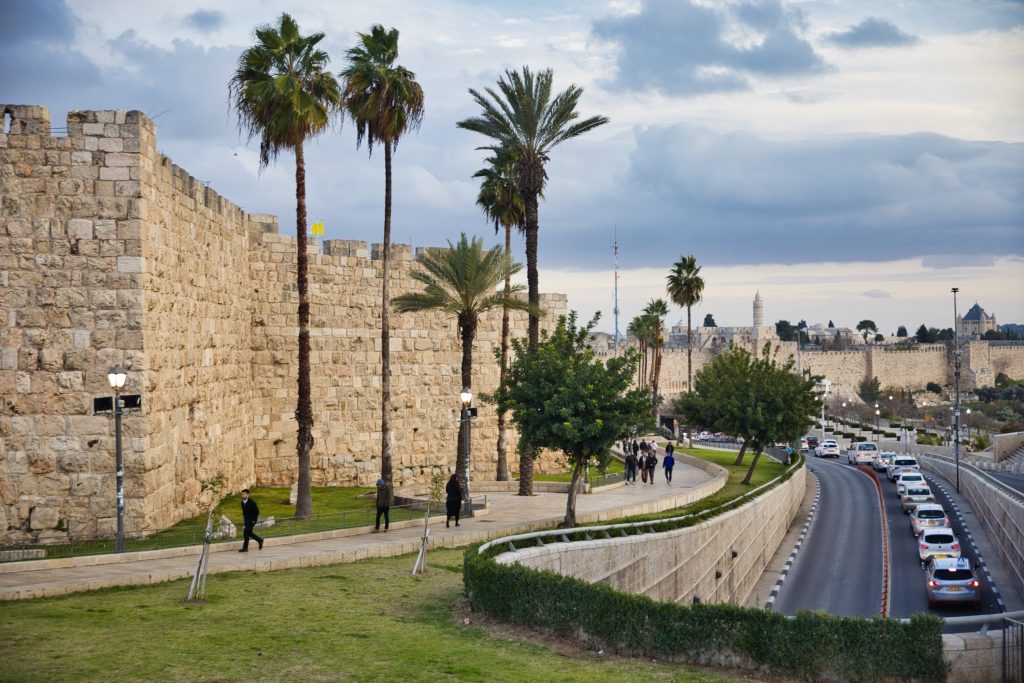
Having ventured across the entire length of the Old City from right to left and from up to down and back, criss crossing through the many souks and little covered bazaars, we felt we needed to see a bit of Jerusalem outside the city walls. As always, walking is our preferred method of exploring a city.
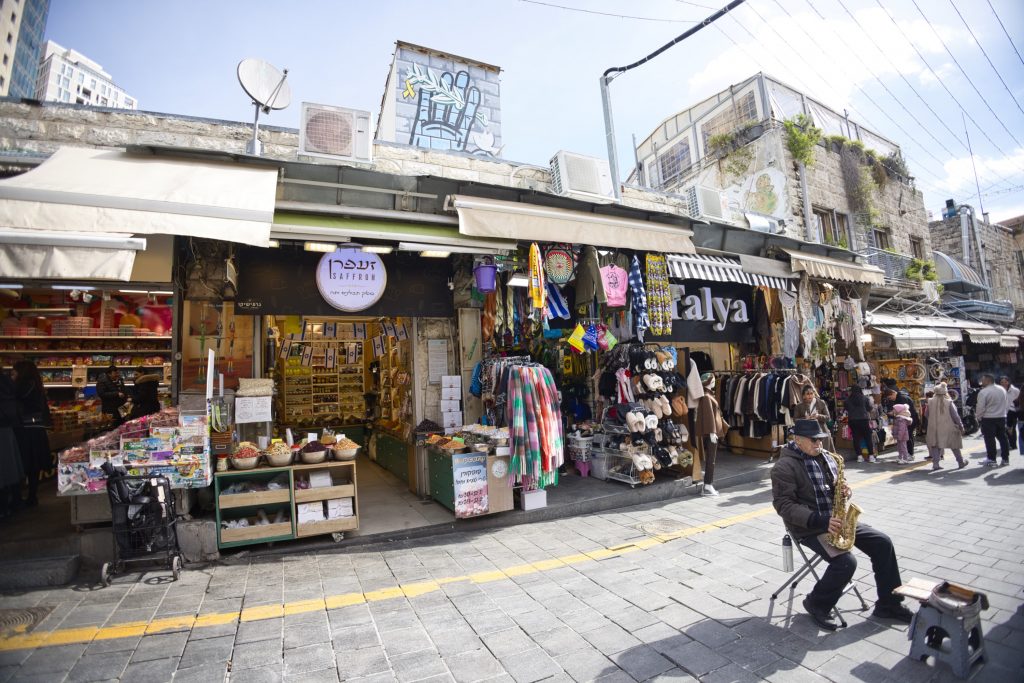
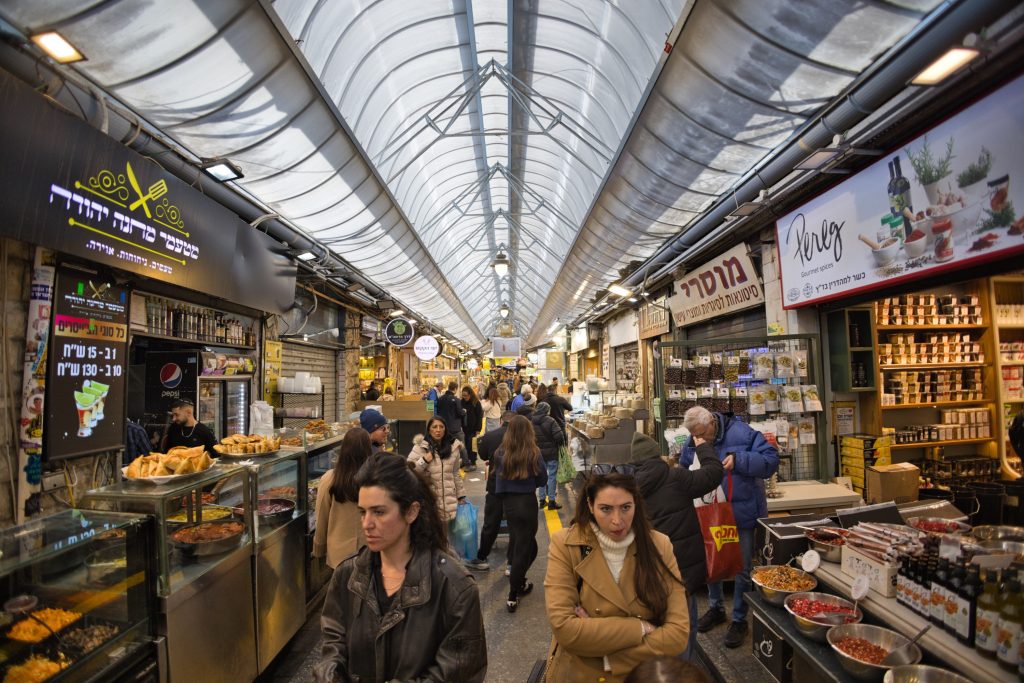
So we walked to Israels largest market, the Mahane Yehuda market or in short: Shuk. Partly covered, partly under open sky, this is a sensory overload for foodies. Any type of fruit, dried nuts, vegetables, meats and sweets are being offered. Everything is proudly displayed artfully in very appealing stacks of goodies. Fresh bakery wares, any type of spice and spreads are being offered. Dozens of different olives, hummus, and cheeses. Each stall specialized in a different produce. We bought roasted cashews, dried apricots and warm edible chesnuts. We were surprised by the prices. They were quite high we found. Chris for example paid 5 EUR for a cup of fresh fruit juice.
Nevertheless we were glad we came as a market always gives you a view into peoples lives. And Israelis definitively like to cook with fresh ingredients, not preprepared, frozen food.
Time for a coffee break we thought but then wandered quite a while before we found a place where it was sunny, not windy and therefore pleasant to sit. Unfortunately while the place met our demands, the coffee did not. They served instant coffee cappucino, to Esthers chagrin… we should have gone back to the Austrian place. Chris had opted for the mint tea.
Taking one more tour around the impressive outer city walls we decided to have an early dinner at an Armenian restaurant. It is not easy to find a good place for food inside the city walls, unless you like hearty street no-frills street food. Unfortunatly the recomended Armenian Restaurant turned out to be closed. Like so many here as tourism is very low, and many shops or restaurants remained closed.
We decided to splash out and have a proper new years dinner to start the year at Happy Fish, which was in walking distance outside the walls and one of the posh restaurants in Jerusalem. Fooled by a 4.5 star rating we settled down expecting gourmet food but found exorbitant prices for OK food. Luckily, we’re not big eaters. Portions were small, but the bill was impressively large. SStill, it beat eating in a little cave under harsh neon lights, at plastic tables with vinyl tablecloths, while bad playlists played through crackling TV speakers—like many of the otherwise tempting places inside the Old City walls.
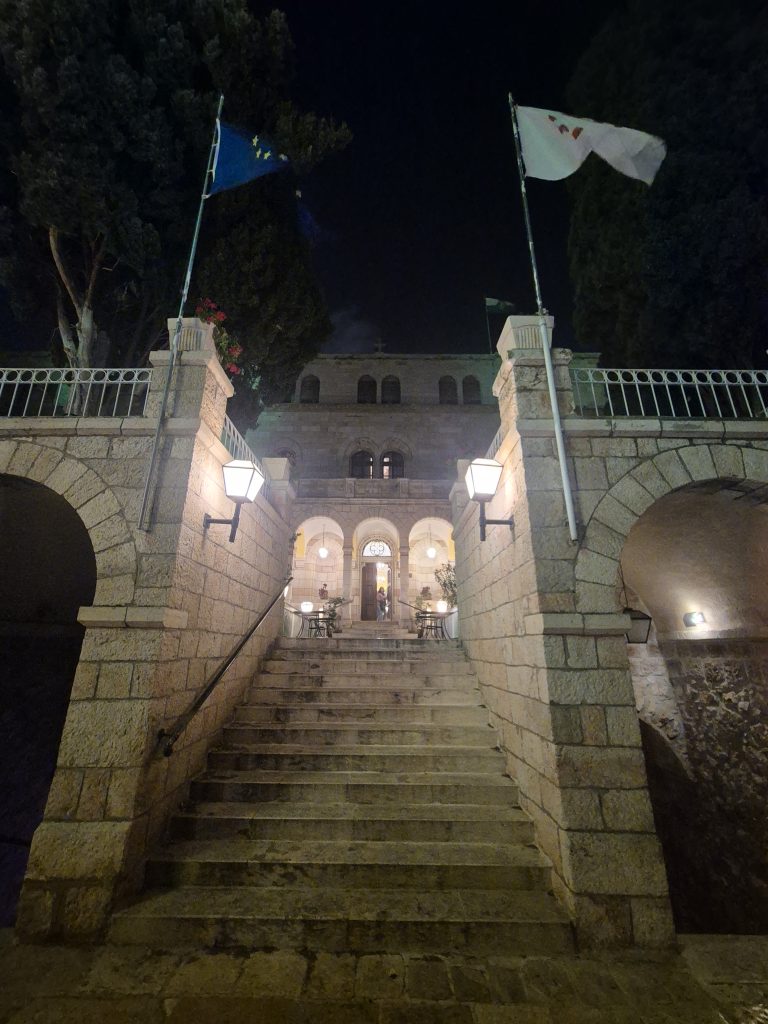
So at our last evening in Jerusalem, we ended the day with a glass of hot mulled wine at the Austrian Hospice and recapped the day for our blog.