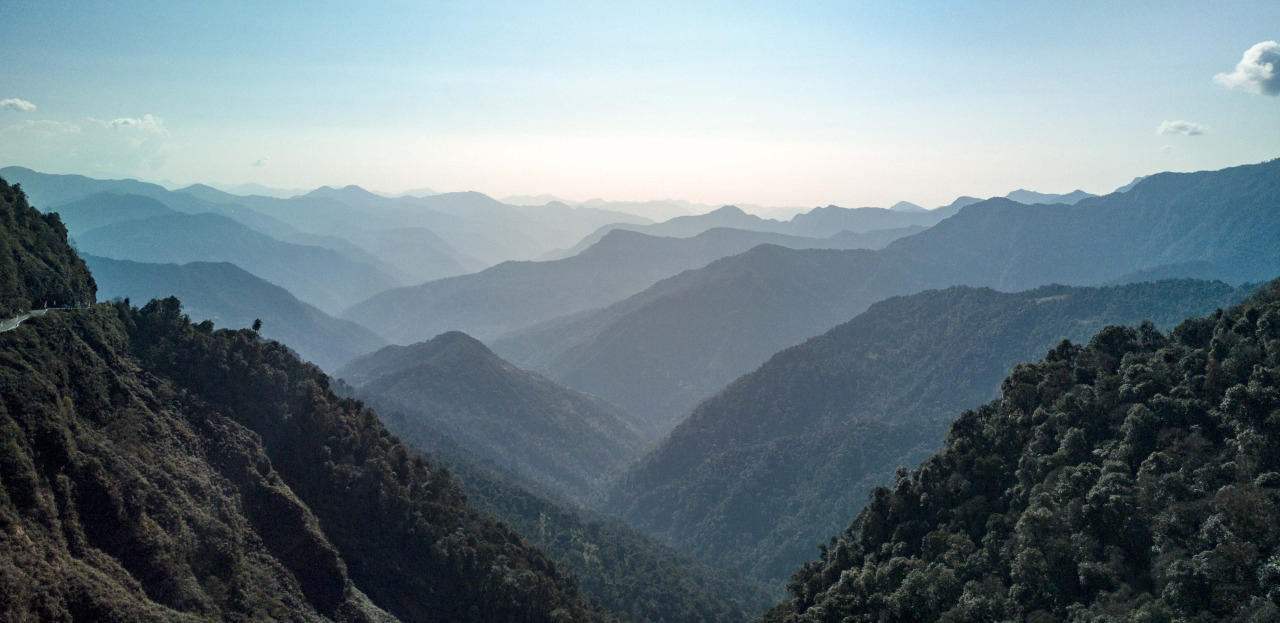
Today it‘s kosher breakfast buffet. As it‘s still shabath/ sabbat here in Israel and our hotel observes it in part, we don‘t get to use the nice coffee machine to make a cappucino. Just filter coffee, as no electrical circuit is allowed to be ignited/ activated. Bread is from yesterday and no toaster is allowed to toast the bread either. But we saw lots of traditional Jewish dishes for breakfast, Chris must have tried all the different sweets. The selection was very large, there is no way we could have tried all the new foods even if we wanted to.
After some (for us) unconventional breakfast we decided to drive to Ein Gedi and do the walk in Wadi David we had planned for yesterday.
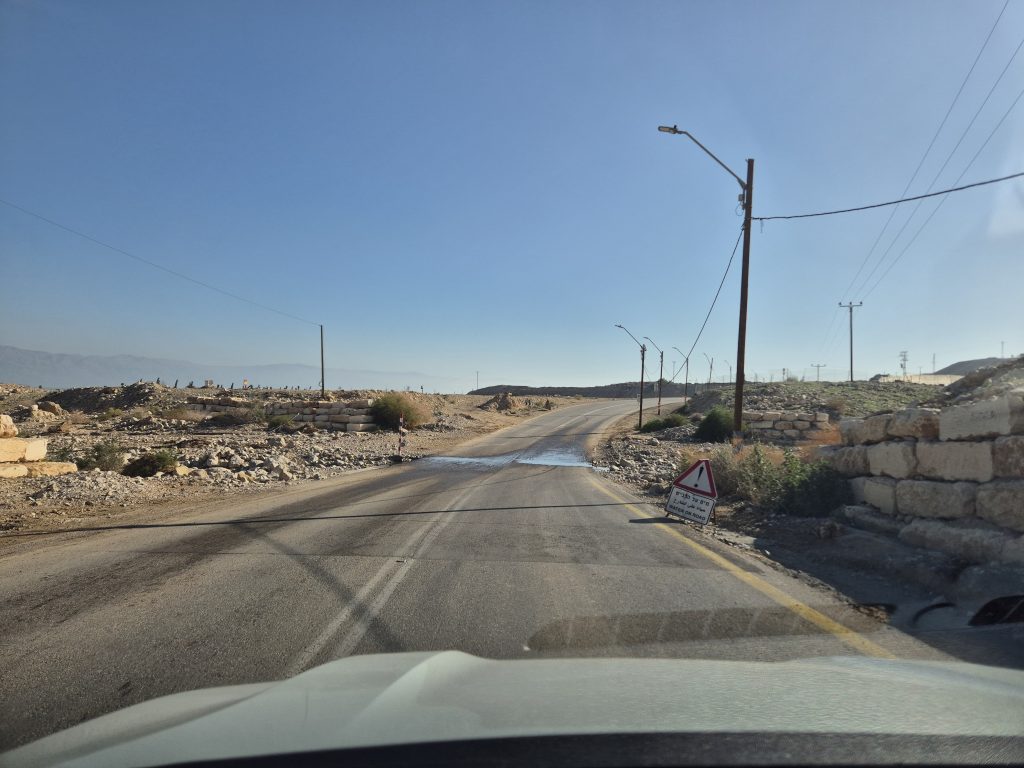
The road was open again and in a mere 20 min (instead of our previous 3 hour drive) we were at Ein Gedi Nature reserve, ready to hike with good shoes, water bottles and nuts/ dried apricots. We bought the tickets online and headed for the entrance.
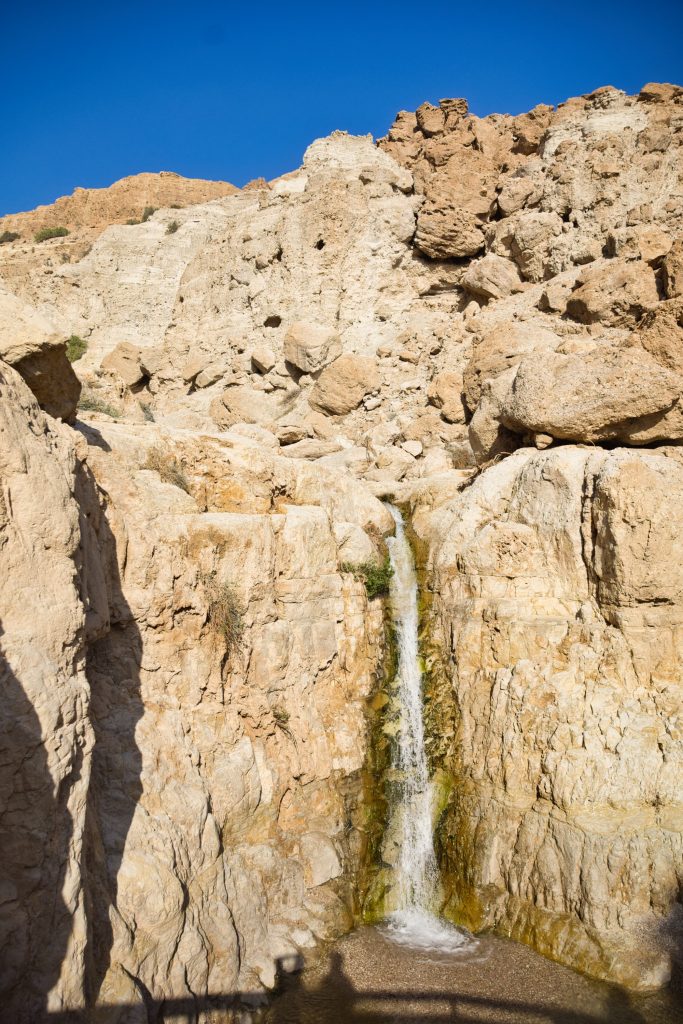
Ein Gedi is known for their picturesque waterfalls and wild life. But then we felt we were victims of the weather again. Only the lower waterfall was accessible, a mere 5 min walk from the front gate. Great! Strong rains back in May had made most of the trail inaccessible and the expected repair time of August 2025 was greatly missed. Despite the bad news, we headed out to the lower falls, while we were here and were a bit underwhelmed by the little waterfall at the end of the short path.
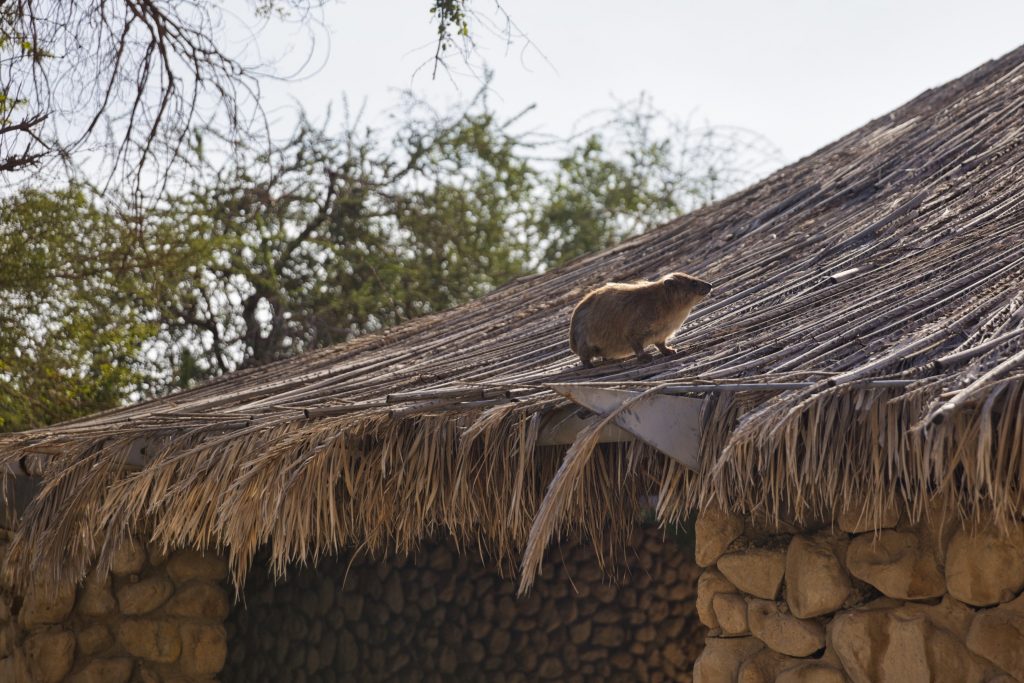
On our way back we at least had a little wildlife sighting… a rock hyrax, a sort of overgrown guniea pig was sun bathing on top of a roof very close to us. We had seen many of those in Zimbabwe, but that was Esther’s first here in Israel.
Luckily there is a second Wadi, Wadi Arogot, that was also part of the Ein Gedi Nature reserve just a few kimolmeters drive away and that one seemed to be open for a longer hike.
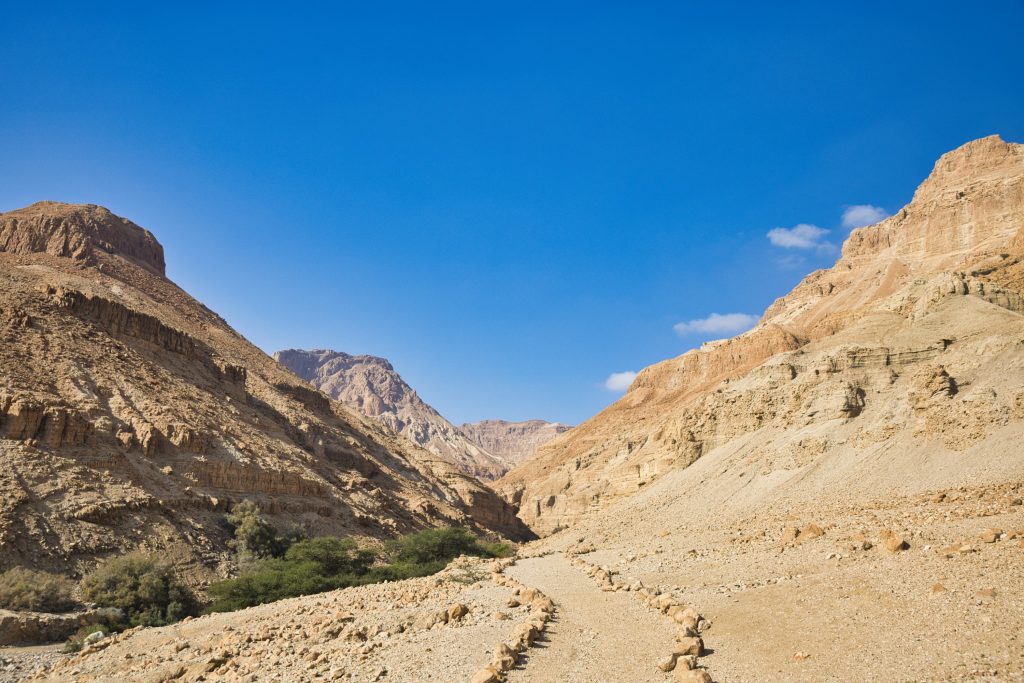
What nobody had told us—and what no guidebook mentioned either—was that there are two alternative routes to reach the upper pools. One follows the mountainside in full sunlight; the other means literally climbing up the riverbed, through mud and pools of water. We also hadn’t known that an online reservation is required in advance. Luckily, the woman at the entrance gate sorted this out for us on the spot—tourist numbers are still very low—and warned us that we should be prepared for hip-deep water and getting wet. We thought it was a joke.
Wandering up about 20 minutes, we hit the first intersection of those two paths and saw a family in full swimming gear making their way through the stream and the pools that came to chest high. No joke.
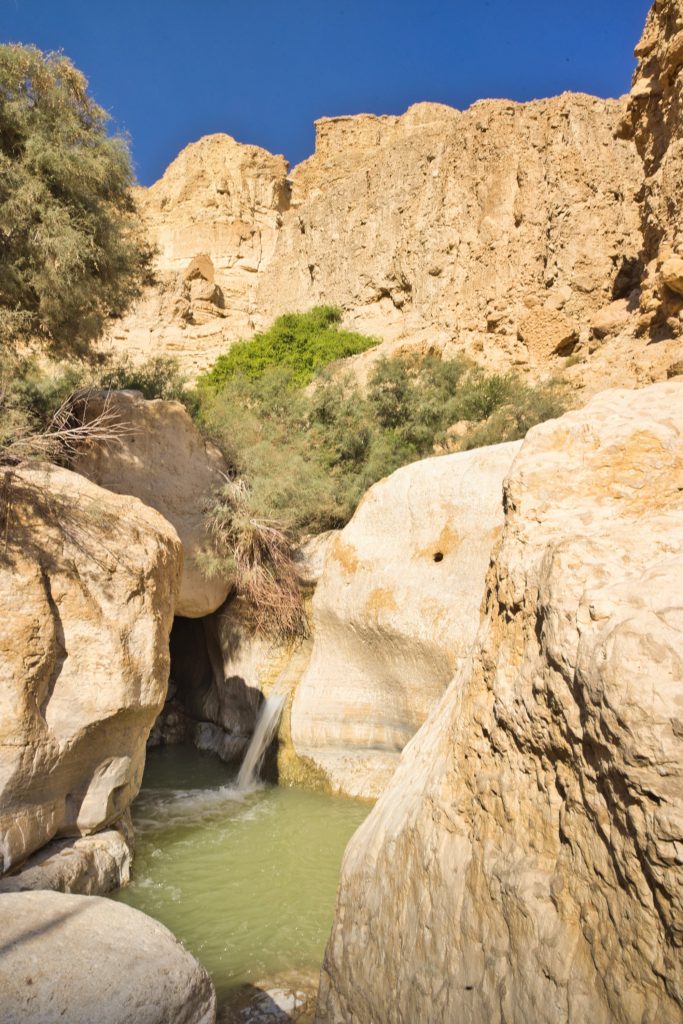
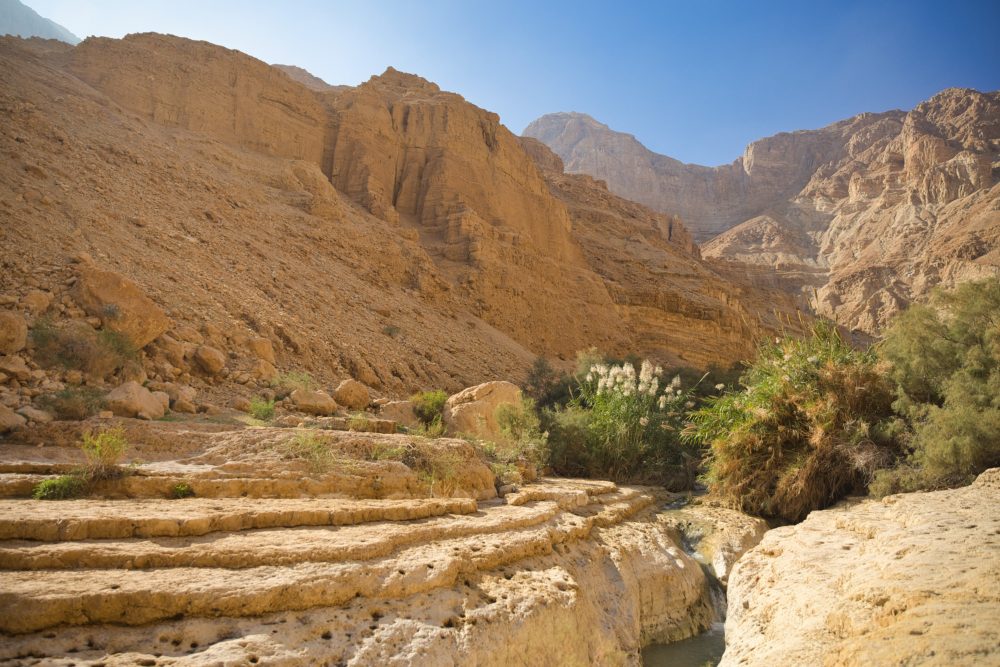
We decided to give this a pass and continued on the sunny mountainside path. We were not equipped to wade through hip deep pools. The next occasion of the two paths crossing looked more manageable, the riverbed shallow and it stated that there was a hidden waterfall in the gorge. Down we went, hopping across rocks in the riverbed and arriving nearly dry at a picturesque little waterfall, that was only visible from down here. Very pretty canyon and waterfall indeed, lush greenery by the waterside. While the steep canyon walls were brownisch bare and looked like rocks could fall off any time. Apart form a few acacia trees there was no green, all was very dry and arid.
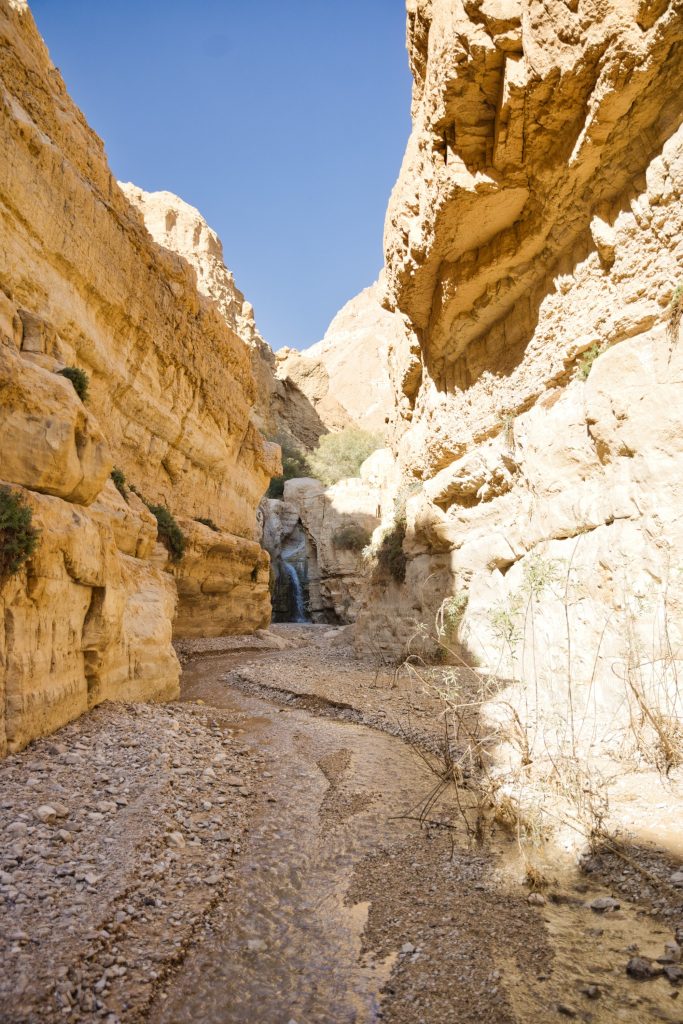
This was our half way point on our way up. we went the upper path again to the beginning of the stream. That took us another 30 min and the last few hundred meters the river bed was the only way up. No more path. Feet got wet a bit, but it was a nice hike to the upper pools to sit down, munching on cashews and apricots. At least we felt that this was a good hike and the weather was perfect. Few people, blue sky, no clouds and not too warm either.
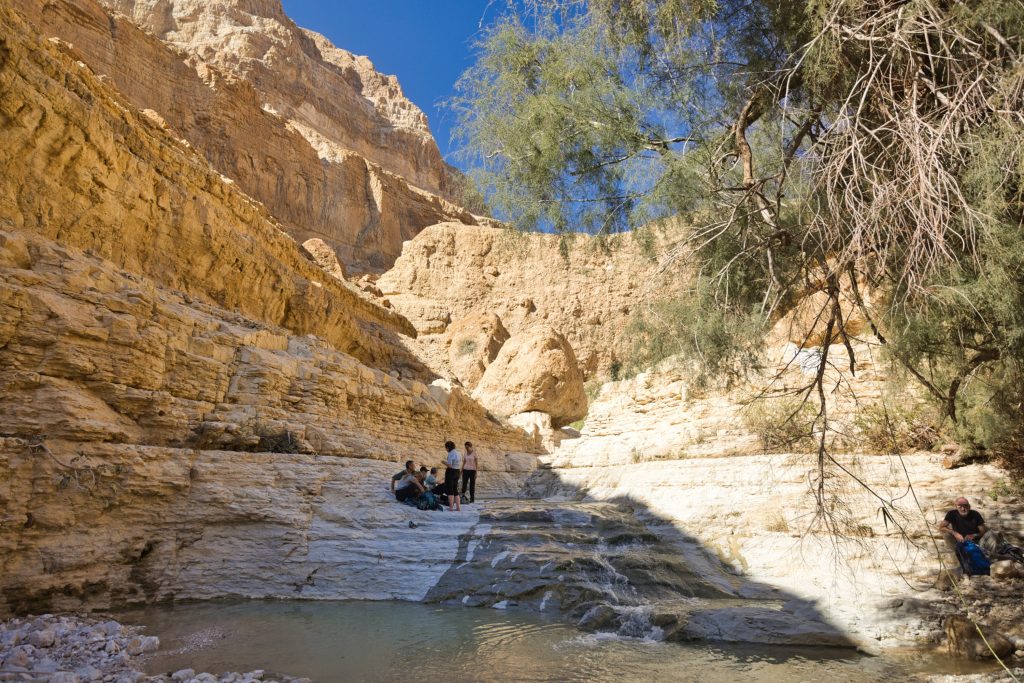
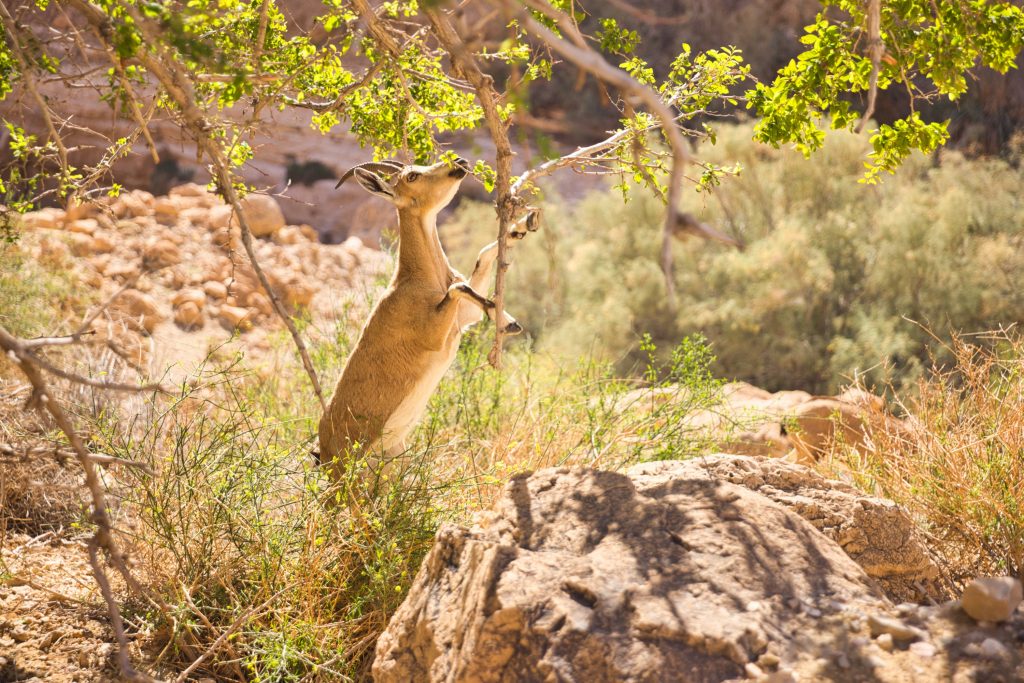
Wildlife here consists mostly of birds and rock hyraxes, both of which we spotted quite frequently while walking up the trail. The further we got, the fewer people we saw, as many families don‘t make it past the first set of pools of the half way waterfall. Walking down again, nature had another treat up her sleeve for us. Rounding a corner, we suddenly found ourselves in the middle of a small herd of ibex. Two males with large, curved horns and four females were all trying to reach the leaves of an acacia tree. They showed no sign of shyness, allowing us to watch them calmly and at close range.
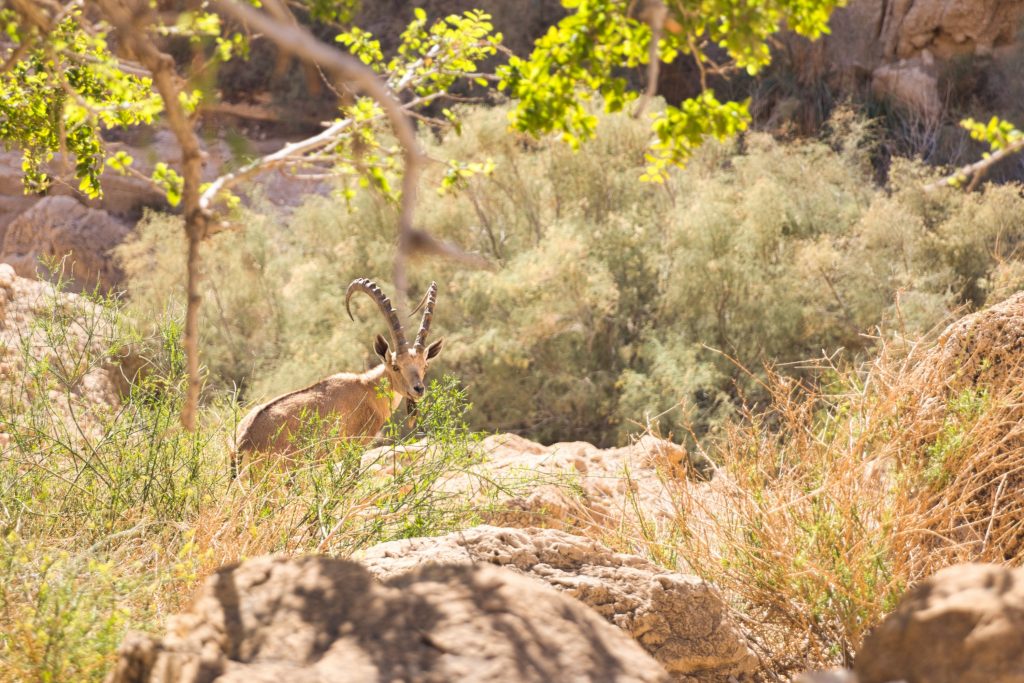
Ibex are found only in this part of Israel, and their numbers are limited. Seeing them this close felt like pure luck.
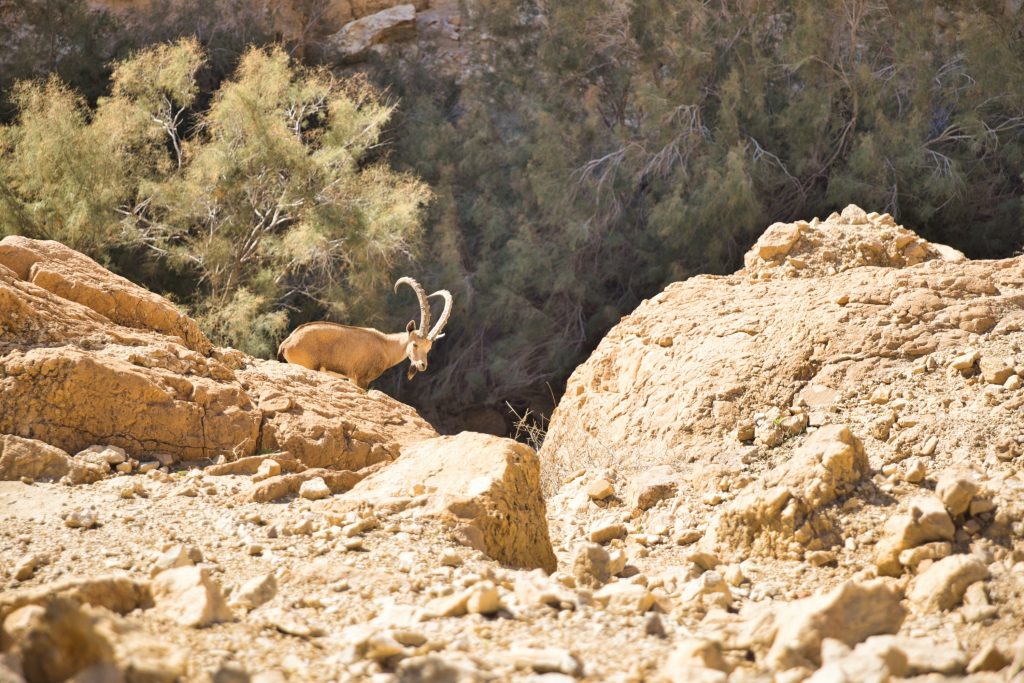
Back at the parking lot, we were surprised to realize we had spent three hours hiking—but it felt good. We were more than ready for a swim in the Dead Sea.
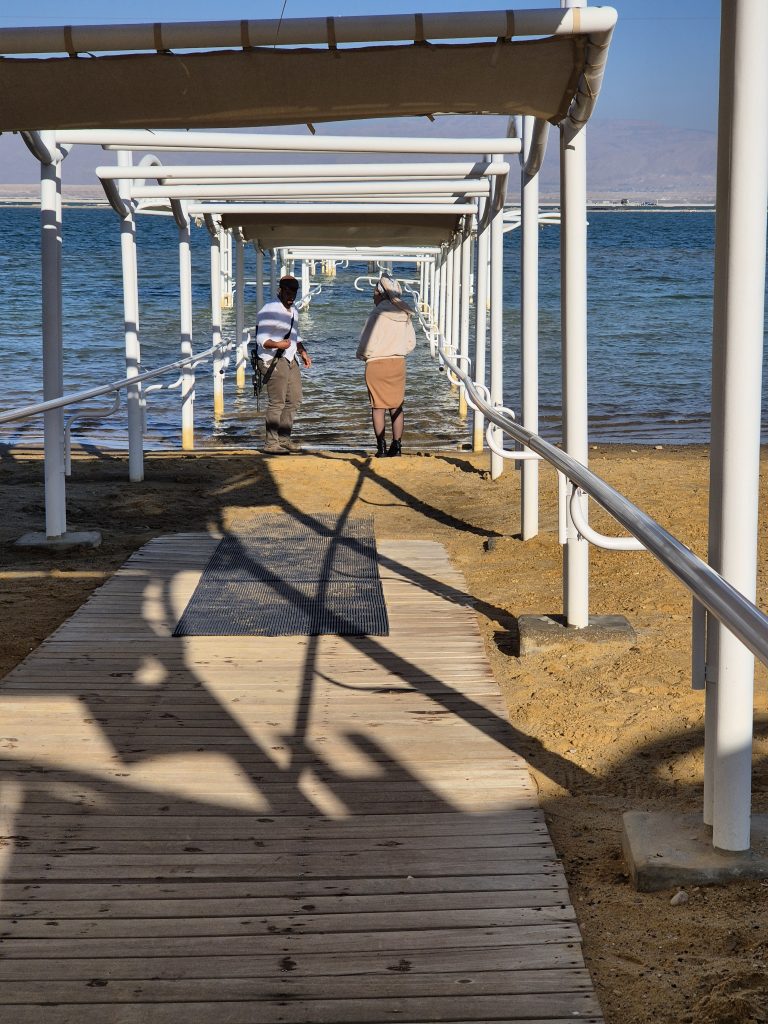
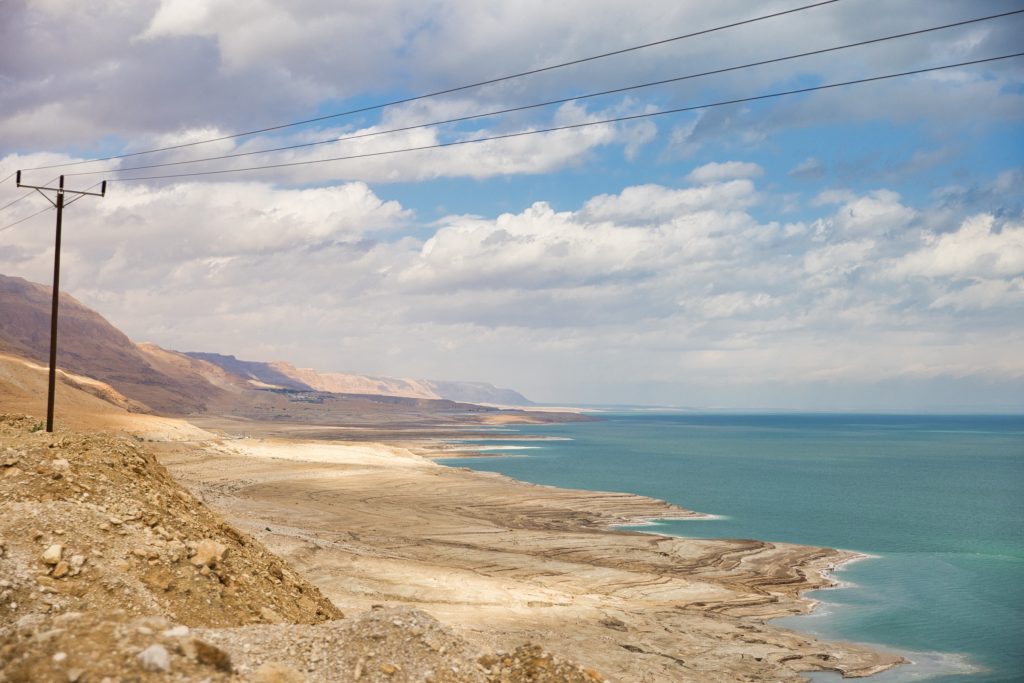
Back at our Greek-themed Milos Hotel, the Sirtaki music was still playing on an endless loop (just as it had the day before). We slipped into our swimwear and headed for the beach. Our hotel borders directly on the Dead Sea—or, more precisely, on a gigantic man-made salt pool beside the Dead Sea. The “beach” of Ein Bokek isn’t natural at all—it’s an engineered salt lagoon, with imported sand and carefully controlled water levels to keep the Dead Sea usable for tourists. The Dead Sea’s natural shoreline consists of sharp salt crystals, hardened salt crusts, mud, and unstable ground prone to sinkholes. Walking there barefoot is very unpleasent as Chris experienced more the 15 years ago, when he stayd at Ein Gedi Kibbuz.
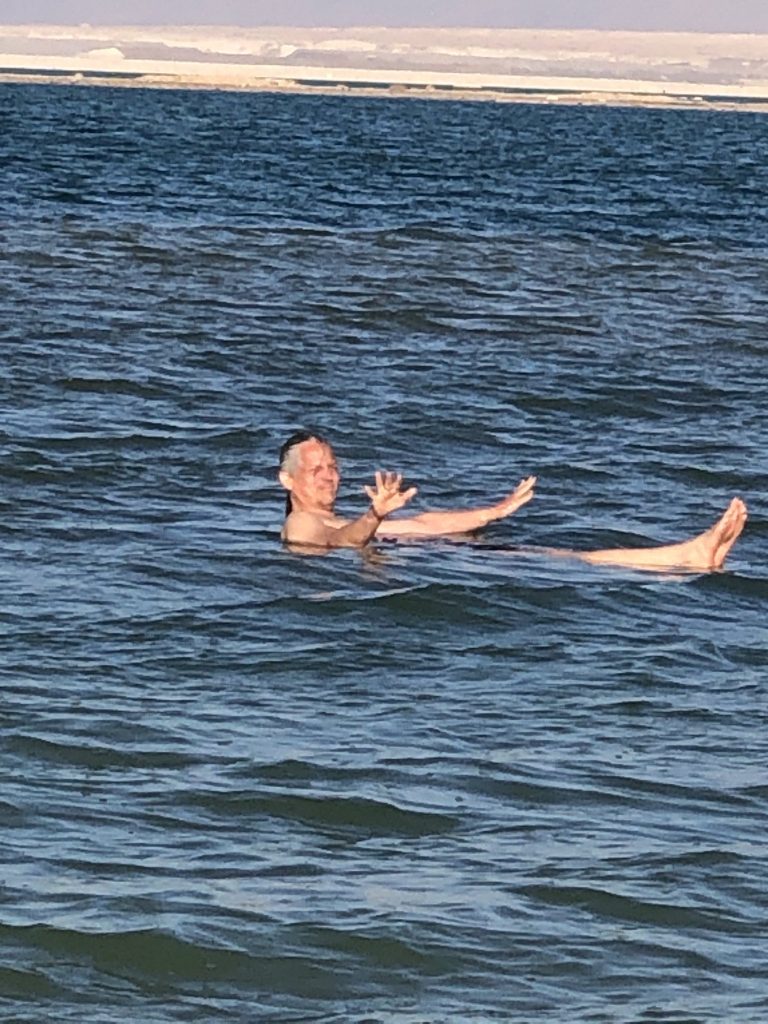
The hotels here carefully regulate the water level and manage the salt, preventing it from accumulating and hardening along the shoreline. The sand there is brought in by truck to make for a pleasant beach experience. Having floated in the dead sea before in Jordan, the feeling was not new but always a bit surprising to bob on the water like a cork…. Impossible to drown. The sand used on the beaches at Ein Bokek is quarried inland and consists of limestone-based sand or finely crushed dolomite. Crucially, this material is chosen to be chemically inert—it does not react with the extremely saline water and does not dissolve, clump, or bind with salt. Ordinary beach sand would quickly turn into a solid, concrete-like mass under Dead Sea conditions. And since the Dead Sea is shrinking by roughly one meter per year and natural shorelines retreat rapidly—leaving behind sinkholes and unstable ground—only this gigantic pool system ensures continuous tourism.
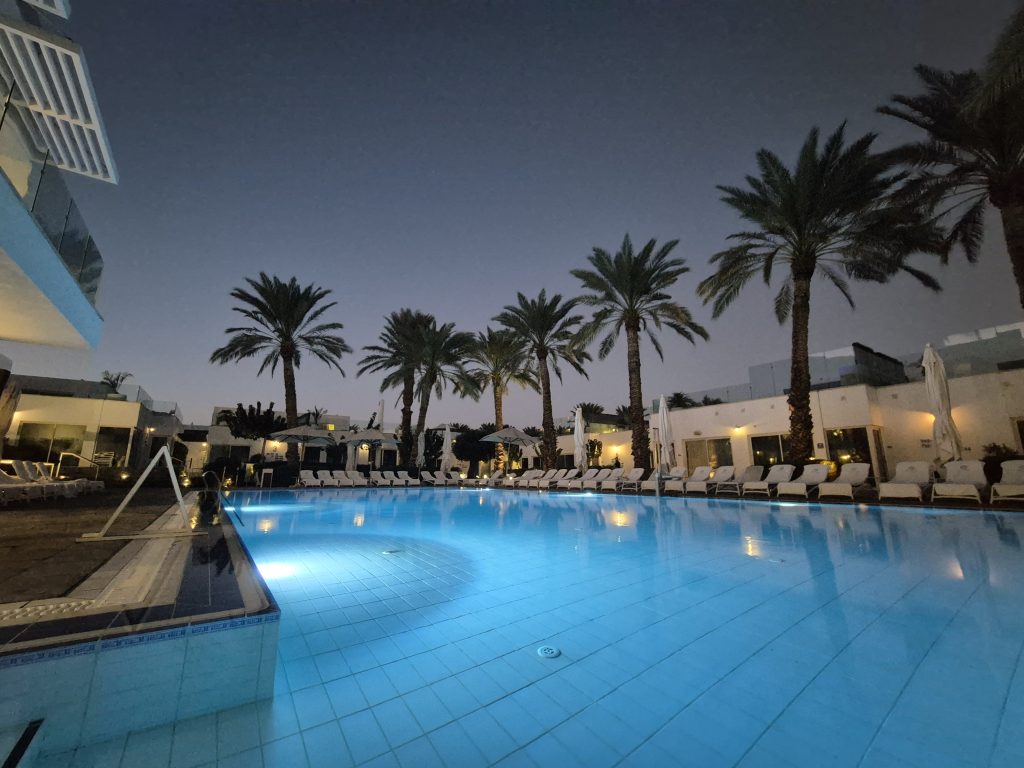
Esther, ever the Warmduscher, still preferred the bathtub-warm, salt-free, chlorine-rich jacuzzi and hotel pool to the itchy saline lake that the Dead Sea really is. And to be fair, the pool here is quite appealing.
After lazing away the rest of the afternoon, dinner became an exercise in compromise. The top three “best-rated” restaurants here offer a limited choice between clubhouse charm, a shopping-mall food court, or a burger joint. Since we had already tried the clubhouse—and had managed to order the last remaining items on the menu, with dishes and drinks running out immediately afterward—we decided to go with burgers this time.
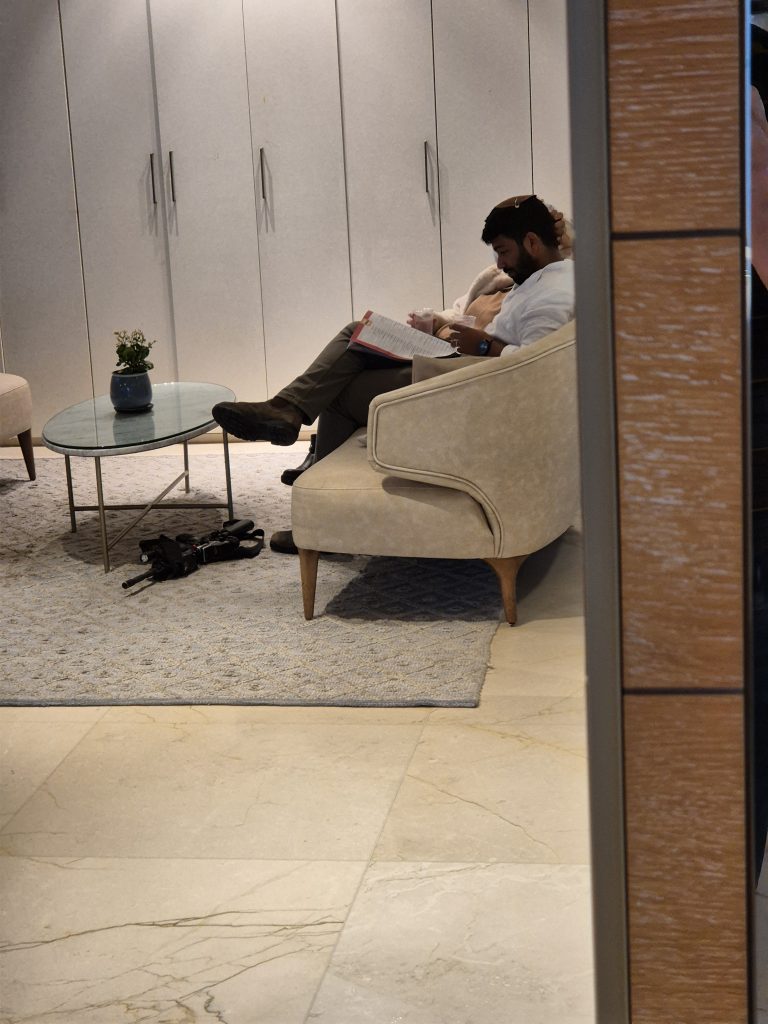
To be fair, Ein Bokek is an assembly of holiday hotels rather than a real village, and with only a handful of Israeli tourists around, options on a Saturday evening were predictably limited. Many guests simply ate take-away food they had brought with them, sitting around the hotel grounds. Some even had their service rifles resting at their feet—an oddly casual reminder of where we are. Dinner done, we retired early, once again accompanied by the hotel’s endlessly looping Sirtaki soundtrack.
Als wir vor Jahren da waren, hatten wir das Pech, das Frühstück mit
ungehobelten Russen zu teilen. da wäre uns die griechische Musik
mehr als willkommen, gewesen.
Aber eines muss gesagt werden: Bei den Reiseberichten von Esther und Chris erfährt man mehr, als aus manchem Reiseführer. Mir erscheint alles realistischer und praxisnäher.